Category Archives: Inner Sunset

Meet Go, Cat, Go!, The Inner Sunset’s Cat Consultancy

Hoodline, 1/28/15

gocatgo2

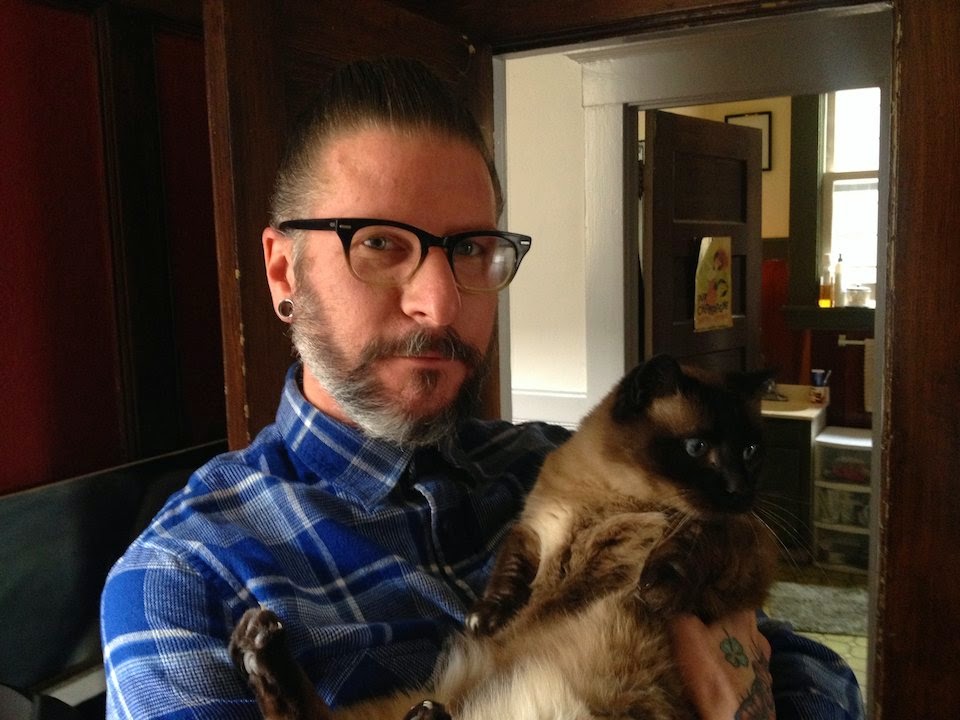
After more than a decade working with people who’ve adopted cats, Daniel Quagliozzi launched Go Cat, Go!, a consulting service that promotes understanding between felines and their guardians. Quagliozzi, an Inner Sunset resident who spent 13 years with the SF Society for the Prevention of Cruelty to Animals, now makes home visits so he can help clients find their way back from feline crises.

“You need to be somewhere in between a social worker and a cat advocate, so my experience with SFSPCA got me where I am now,” said Quagliozzi. His decision to launch a private consultancy was born from frustration regarding the limitations of the telephone. “I launched a business where I could go to people’s homes and see the problem in the environment where the cat is more comfortable. I try to interpret what’s going on for people to help them make sense of it.”

In a typical day, Quagliozzi sees a handful of clients in and around San Francisco and deals with a broad spectrum of cat behavior issues, including (but not limited to) litter box avoidance, spraying, aggression, undersocialized behavior, scratching, and excessive meowing. “My general fee for a first consultation in the city is $125, but for Inner Sunset residents, I offer a $25 discount,” he said, since he lives in the neighborhood. Each client receives 30 days of free correspondence for “troubleshooting,” and follow-up visits are $75 each.

Go Cat, Go! launched in 2013, but Quagliozzi said his business is now sustainable, adding that strong word of mouth and social media have helped him grow the business quickly. “I like to think I’m a good representation of San Francisco people, and my approach is unconventional, but it’s pretty straightforward. I’ll tell people that they’re effing up if they are.”

Quagliozzi’s top priority is resolving problems so cats can stay in their homes. “For me, when you say you’re going to surrender your animal, that’s life or death,” he said, explaining that adult cats surrendered to shelters have a hard time being adopted. “My objective is to avoid that suffering both in the animal and in the human being. When the human-animal bond breaks, that’s usually when the shit hits the fan. Or the rug.”

Since starting Go Cat, Go!, Quagliozzi was cast in Animal House, a reality TV show. “It’s kind of like ‘Extreme Makeover’ for animal shelters, only we’re not showing up with a big bankroll.” Last year, he shot a pilot in rural Othello, Wash., where Animal House “rallied a community together to build their shelter.” Program producers are currently seeking a network distribution deal so they can shoot additional episodes.

“The show really touches my heart because it’s about shelter work and changing shelter environments so they can save more animals or just serve their communities better,” said Quagliozzi, who plans to attend next week’s 4th annual “Be Mine” party at SFSPCA where attendees can enjoy a catwalk fashion show, cocktails and a “pop-up (REAL) tattoo parlor,” according to the event flyer.

Go, Cat, Go! Cat Behavior Consulting offers a $25 discount to Inner Sunset residents. For more information, call Quagliozzi at (415) 806-1351.

Leave a comment

Filed under Inner Sunset, San Francisco, Uncategorized

The Louies And The News: Saying Goodbye After 28 Years

Hoodline, 1/12/15

louiepereetfils

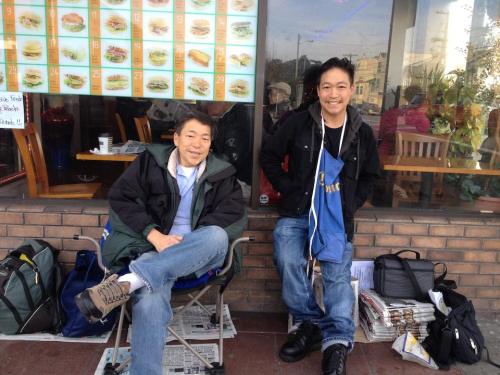
After 28 years of selling newspapers directly to Sunset customers on weekend mornings, Daniel and Eric Louie are retiring from the news hawker game this weekend.
For Eric, a weekend job he stumbled into while selling candy in fifth grade helped fuel a desire to become a journalist. Daniel, his father, has shaken hands with local politicos, met thousands of his neighbors and become what he calls “the mayor of Irving Street.”
In 1987, then 10-year-old Eric approached an agreeable news vendor outside Uncle Benny’s Doughnut Shop to ask if he could share the spot to sell school candy. “When the [newspaper delivery] driver came by, he asked, ‘you can sell candy, can you sell papers?’ and I said, ‘yeah, I can do it,’” Eric told us.
Eric showed up the next Saturday and started working. Once a crime reporter in Stockton, Eric now owns a home in San Leandro where he works as a video news cameraman and caterer, but he’s been coming back on weekends over the last year to spend more time with his father. Daniel took over the business when Eric graduated from high school.
After that, Daniel would sell one pile of papers from Irving & 22nd on Saturdays and started a second corner outside a KFC at Irving & 20th on Sundays. At their peak, the father-and-son team sold about 100 copies of a combined early edition of the Chronicle/Examiner each day, enough to create an improvised chair.
Now, “my dad brings a seat, but I’m used to not having one,” said Eric. An average Saturday now consists of 18-20 sales, while Eric stands or leans against the facade of the donut shop.
In 1987, Eric said there were multiple news vendors between 9th and 19th along the commercial strips on Irving and Judah. “It used to be that on Sundays, this was a very quiet, seemingly remote location and there was really no activity,” said Daniel. “Now, there are a lot of people conducting commerce on Sundays.” With the arrival of Walgreens, Starbucks and other corporate retailers, there’s “a loss of local, historical or traditional neighborhood flavors,” he said.
“On Sundays, there’d be no cars parked here and all the businesses would be closed,” said Eric, who noted that a large influx of Asian-American residents in the 1980s changed the area’s character. He described a childhood incident in which a neighbor threatened to call police because someone lit fireworks to celebrate Chinese New Year. “Now, the cops will escort the lion dancers as they blow up firecrackers,” said Eric.
Many factors have combined to erode street newspaper sales, such as a shift to digital content and a gradual decline in the number of elderly customers. “A lot of the older folks want something in hand to read,” said Daniel. “They haven’t become accustomed to reading online because they don’t have access or they’re not attuned to using a computer.” After the Chronicle started selling to local convenience stores, grocery stores and supermarkets, news hawkers took a big hit, Daniel said. “People would do one-stop shopping, plus they felt newspapers were being sold at a discount.”
Both Louies said they enjoy the strong social aspect of selling papers, but “it’s a good decision at this time, just to move on to different things,” said Daniel as Eric nodded in agreement. “It’s good money when you’re 10 years old,” said Eric, “and I have to say, for a little bit, it was more profitable to sell newspapers than write newspapers.”
Daniel and Eric Louie will sell their final editions of the Sunday Chronicle on January 18th, and have invited customers and well-wishers to say their goodbyes on Saturday morning. If you’d like to be one of the Louies’ final customers, you’ll find them outside Benny’s Doughnuts at 2049 Irving St, starting at 8am.

Leave a comment

Filed under Inner Sunset, San Francisco

San Francisco’s Video Rental Stores: Adapting To Survive In Changing Times

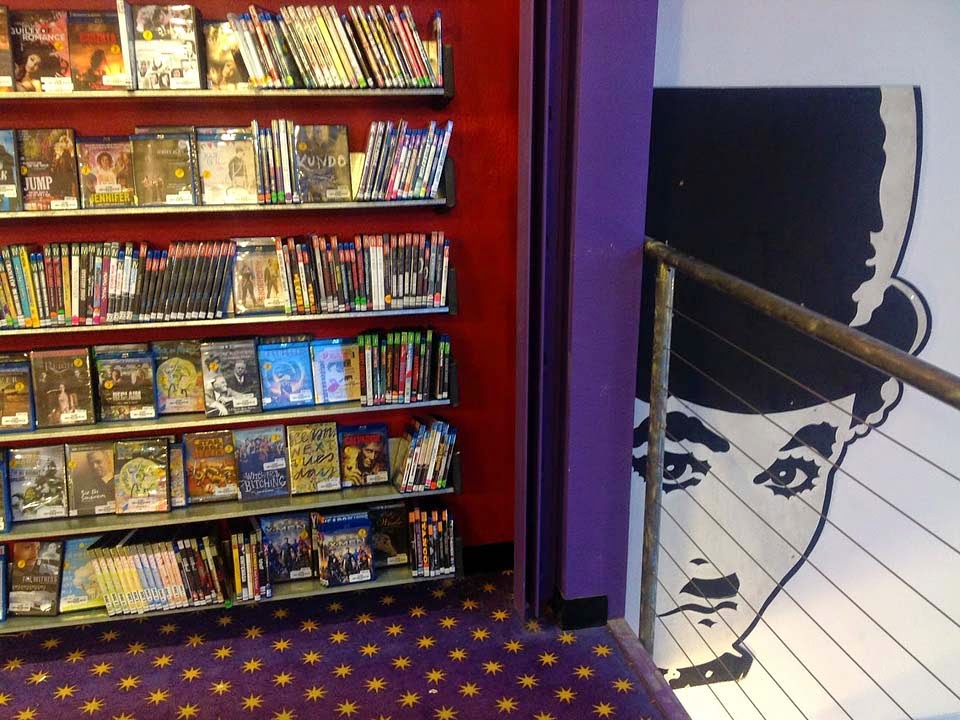
Since 1980, Le Video has provided film fans in the Inner Sunset and beyond with a well-curated selection that simply can’t be found elsewhere.
Standing firm against the likes of Blockbuster and Netflix, the store has built a reputation as a cinematheque, an archive of independent and foreign cinema boasting as many as 100,000 titles. In its heyday, the checkout line would snake out the front door and down Ninth Avenue on typical Friday nights.

By 2014 however, Le Video was on life support. According to manager John Taylor, founder Catherine Tchen was keeping the store afloat using her own money to make payroll, pay taxes and expand the library.
“When I started here in 1999, there were 24 or 25 employees,” said Taylor. “There’s eight total now.”
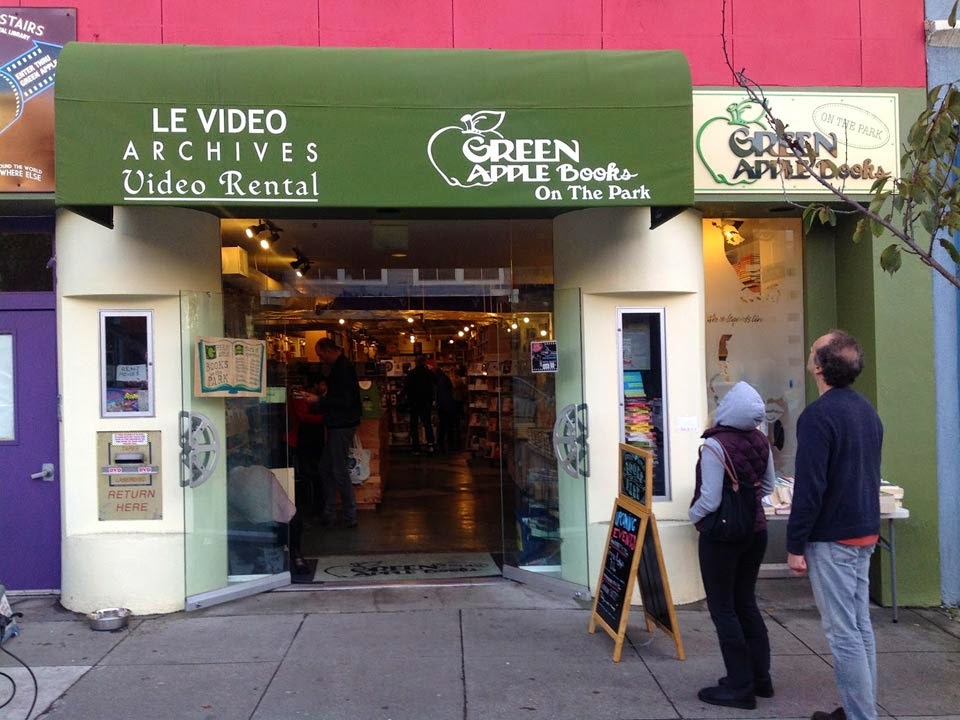
On March 27, Le Video launched an Indiegogo campaign to raise $35,000 for renovating the store, moving the DVD collection upstairs and making room for a new ground-floor tenant, among other goals. In April, before the campaign concluded, Le Video announced a new retail partner: Green Apple Books, an independent bookstore in the Richmond established in 1967. Thanks to media exposure and a strong show of support from the community and its customers, Le Video raised $60,420.
After the campaign wrapped, the store reopened at the beginning of August. “It took longer than we expected,” said Taylor. “Supplies didn’t come through, the DVD sleeves didn’t show up, there were issues with the shelving, different contractors quitting the job, little things like that.”
According to Taylor, these logistical problems may have turned off loyal customers.
“When we opened, it was looking a little rough in here. People would come upstairs, and say, ‘what happened? Where did everything go?’ I think we lost a lot of people by opening too early, but at the same time, being closed a month was too long, and we couldn’t wait any longer.”
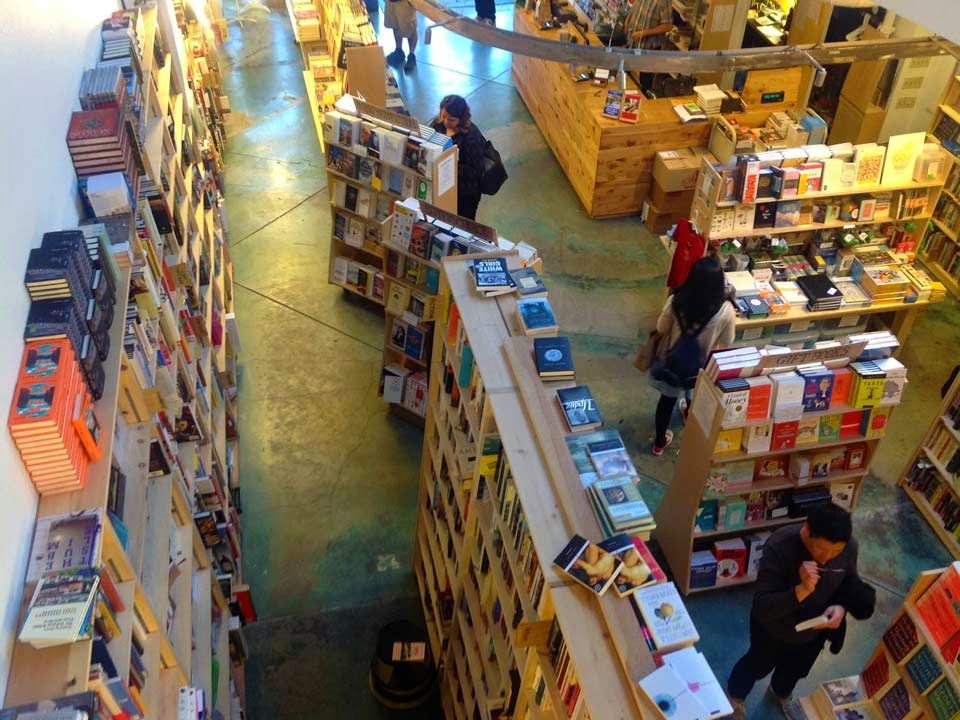
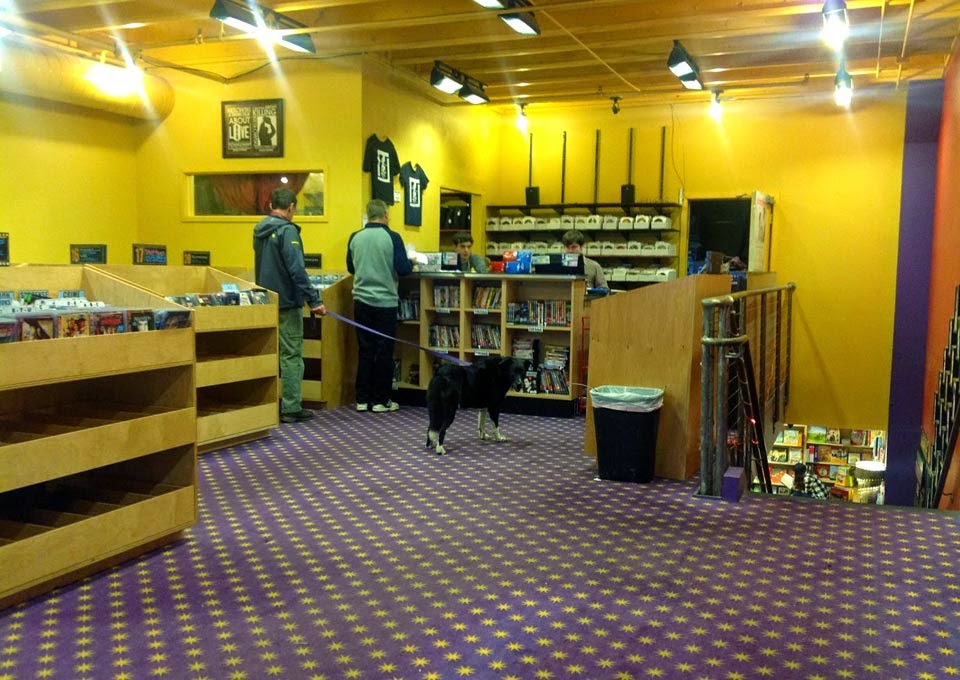
Today, posters and memorabilia adorn the walls and Le Video’s selection is neatly sorted and labeled for easy browsing. When we visited on a Tuesday evening after work, there were a few customers inside looking over the selection. But apparently demand hasn’t met Le Video’s predictions.
“Unfortunately, things aren’t working out the way we expected,” said Taylor. “We hoped that when we reopened, we could stay at the level we were at before and with slightly lower overhead… but that’s not the way it’s been working so far.”
Taylor said business is down 30% from where it was prior to Le Video’s move upstairs.
“We gave free rentals to people as perks for donating, but a lot of those people have never come in to rent anything since donating. It’s really helpful that they donated, but it’d be even more helpful if they just came in.”
Other goals in the crowdfunding campaign (e.g., creating an online database for their archive, customer seating, new computers for in-store browsing) have yet to be realized.
Based on the popularity of independent film and area festivals, Taylor said he sees a demand for the service Le Video provides.
“I went to The Roxie this weekend, and they played French film noir movies, and they were sold out… including 1pm matinees. But I didn’t recognize any of those people as being customers here. My guess for those people is that they get what they want on a daily basis from Netflix or Amazon or somewhere, but they reserve their more cultured film experience for going to the theater.”
A handful of video-only stores remain in the city. Some, like Top World Video in the Inner Sunset and Cole Valley’s Video Nook, have diversified to offer services like smartphone repair and accessories, mailbox rentals and home theater installation. Others, like The Mission’s Lost Weekend Video and Video Wave of Noe Valley, have stuck with their core business.
Gwen Sanderson and Colin Hutton have owned Video Wave for 10 years, but the shop first opened in 1983. Sanderson said a number of factors have combined to erode their business, including the 2008 economic downturn, gentrification, a historic drought that encourages outdoor activity, and televised events like Giants postseason runs and World Cup soccer games. Video Wave is down to one part-time staffer, and Sanderson and Hutton work in the store six days each week. “We’re barely hanging in,” said Sanderson.
Separately, Sanderson, Hutton and Taylor said stores like Le Video and Video Wave provide a higher level of service and expertise than Netflix, iTunes or Amazon, but video stores need to adapt to the way consumers now browse and consume content.
“We’re really just the preservers of a 30-year investment in the neighborhood and our movie collection, more than profitable business people,” said Sanderson. She wants to create a central database for independent video stores that lets consumers see what’s on the shelves at their local stores in real time.
“People want to have us here, but they want to be able to use the devices they’re using all the time to access this stuff,” she said.
“This is very much a neighborhood business,” said Hutton. “When we were talking to the owner who was selling, there was someone in here with their baby saying, ‘I was in here when I was a kid, and I’m still living in the neighborhood, and now, I get to bring my kids here.’”
Hutton said age is a contributing factor; customers over 40 enjoy visiting stores to browse and create a rapport with employees so they can get personal recommendations. “People who haven’t been exposed to anything but the Blockbuster model didn’t have a good time, so they’re not losing out on anything by just browsing on iTunes,” according to Hutton.

 
Hoodline spoke to one video store owner who said that home video rental isn’t economically viable because of a broader trend. 
“Anyone’s ability to manage a small business is being obliterated by digital industries.”
The owner, who asked to remain anonymous, cited Amazon same-day delivery as one of several examples where consumers are choosing convenience over supporting local businesses.
“People aren’t willing to leave the house to buy toilet paper. They’d rather get it brought to them on a little truck. It’s not sustainable; there aren’t going to be enough average jobs.”
According to this owner, renting videos near enclaves of senior populations like Scottsdale, AZ and Boca Raton, FL is still a viable business, however.
.
On its Facebook page, Le Video posts regular updates to make sure customers know the shop continues to add new titles. Taylor estimated that if half of Le Video’s active customers visited the store once each month, the store could continue to operate.
“If we could somehow drone over the DVDs to people, I bet we would do gangbusters,” said Taylor.

Leave a comment

Filed under Inner Sunset, Media, Movies, San Francisco, Uncategorized