Daily Archives: January 6, 2016

The Story Behind The Inner Sunset’s First Firehouse

firehouse1

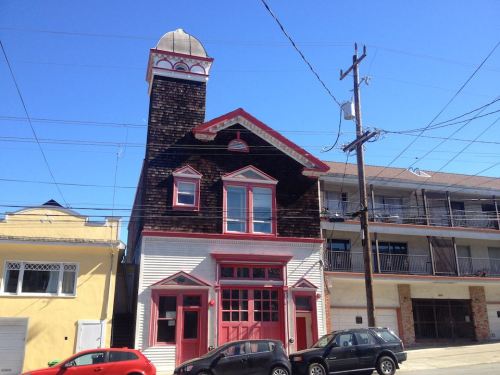
First built in 1898, the Inner Sunset’s oldest firehouse on 10th Avenue between Irving and Judah has been occupied continuously since construction. Over the last 117 years, the building has been home to two fire companies, a school, and currently, a publishing company.

Designed by architect Charles R. Wilson, the firehouse at 1348 10th Ave. was built for Chemical Co. No. 2, an SFFD company that used chemicals for fire control. Wilson designed several other buildings in San Francisco that remain, including the Empress and Windsor hotels in the Tenderloin.

In 1900, Company No. 2 was relocated to 1819 Post St. to make room for Engine Co. No. 22, which tapped the city’s new water mains. (By 1948, all SFFD chemical companies were converted into Tank Wagon Companies.)
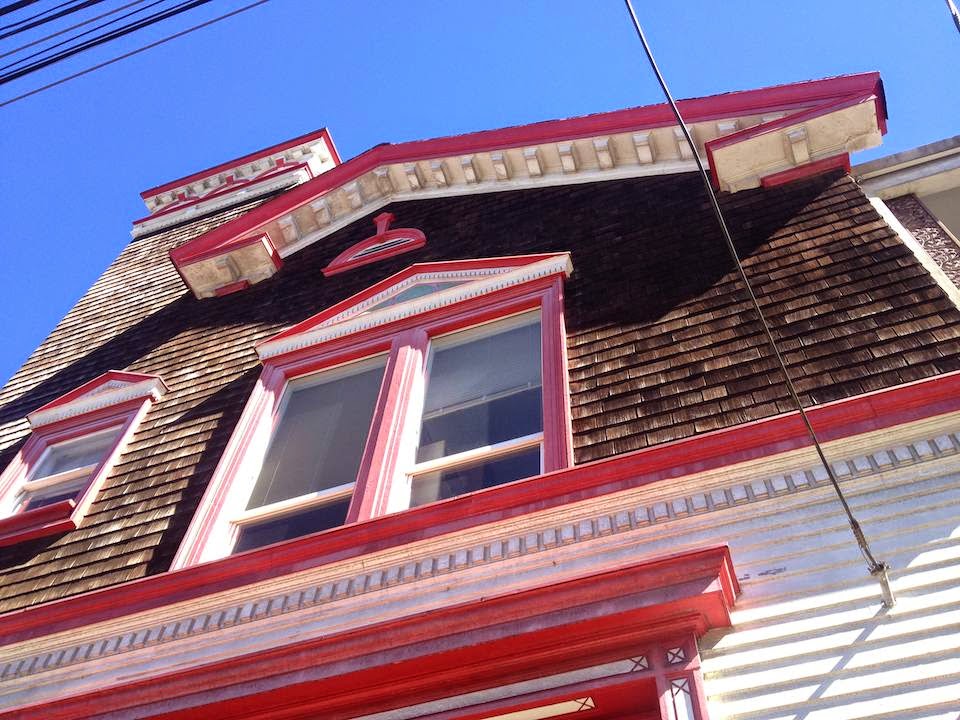
The exterior still has all the hallmarks of a classic firehouse (including a tower where hoses hung to dry) but once inside, it’s clear that the space has been adapted for different uses over the last century. The city moved Engine Co. No. 22 out in 1962 and sold the building in 1969 to Oakes Children’s Center, a school for children with “a range of behavioral and neurological disorders.” In 1970, the firehouse was listed as #29 out of 265 designated San Francisco landmarks.

By 2008, the school had outgrown the space and sold the building to Ignatius Press, a Catholic publishing company. For Father Joseph Fessio, an editor, “there’s no place in the entire world that’s as convenient as this location. It’s like having a little town in the middle of a big city.”
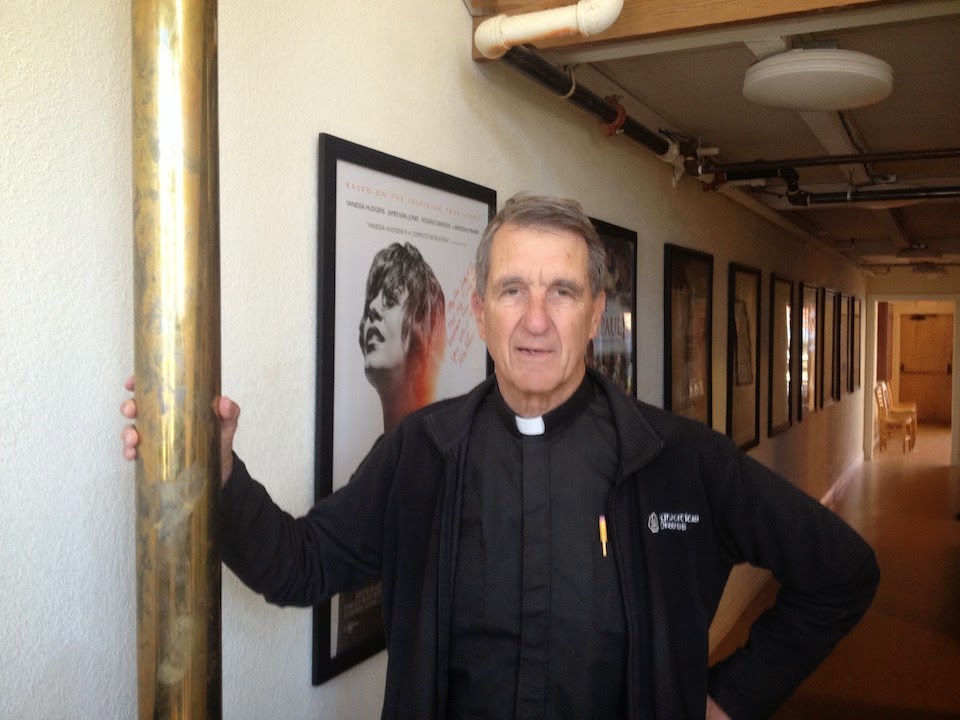
Before relocating to the firehouse, Ignatius Press was operated from a house near USF that was owned by Carmelite nuns. Today, about 15 people work out of the converted space. “We didn’t want to get an industrial building, because we’re more a family than a business,” said Fessio.

After it moved in, Ignatius Press significantly remodeled, adding a mezzanine level and refurbishing the basement with an exercise room and a guest room.

“This building was perfect—it was zoned so we could have a school, it’s in a residential neighborhood near the stores, and the N-Judah is right there,” said Fessio. “This area has everything.”
Leave a comment

Filed under History, Inner Sunset, San Francisco

A Look Back: Logging Eucalyptus Trees On Mt. Sutro

Hoodline, 2/16/15

sutroforest5

   Flickr/Kevin Bovard

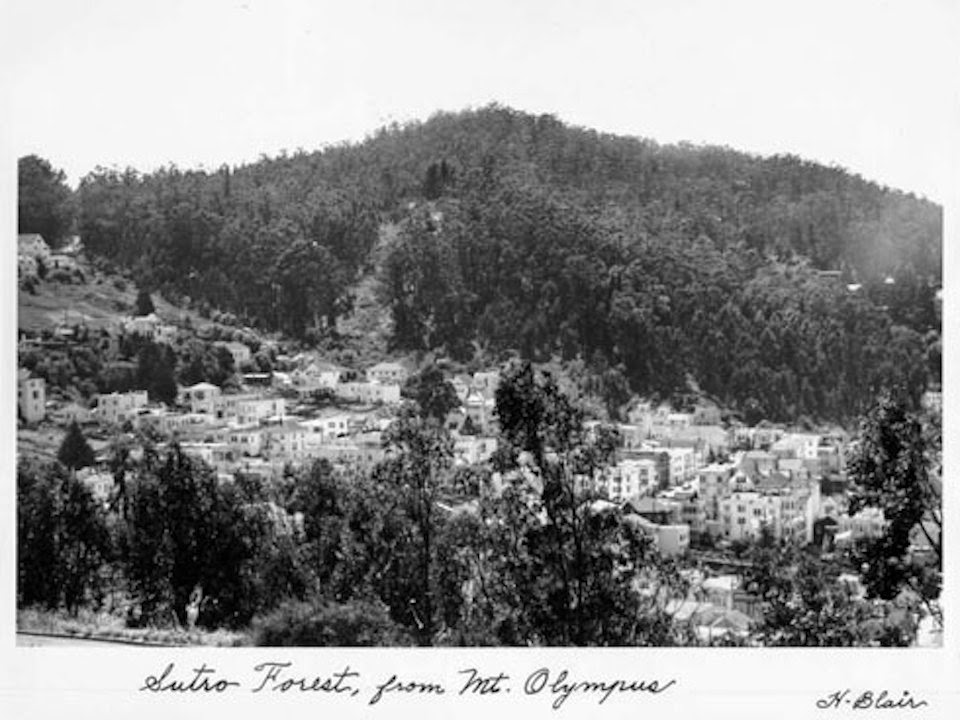
Shrouded in fog and densely studded with eucalyptus trees, Mt. Sutro is the Inner Sunset’s most prominent natural landmark. Despite the neighborhood’s ongoing evolution, it’s clear why the city’s third-highest hill has been used for a university hospital, a Cold War missile battery, and until 1934, a commercial lumber operation.

courtesy San Francisco Public Library

After cashing out his Nevada silver mining holdings in 1879, German engineer Adolph Sutro moved to San Francisco and began acquiring large tracts of real estate. At his peak, Sutro owned as much as 10 percent of the city, including Land’s End, Mt. Davidson and what was then known as Mt. Parnassus, a sand dune covered with native grasses and shrubs.

Sutro used his wealth to create attractions like the Cliff House, Sutro Baths, and critically, infrastructure that connected his new western neighborhoods with the rest of the city. During his tenure as Mayor, he donated 15 acres to Affiliated Colleges of the University of California to create what’s now known as UCSF’s Parnassus campus. He also had thousands of eucalyptus trees planted to the west and south of present-day Mt. Sutro, extending at one point all the way to Monterey Boulevard.

This large-scale forestry operation used a nursery near Laguna Honda as a research and development facility. Sutro’s tree-love led him to kick off the state’s first Arbor Day in 1886, but historians note that forested land within city limits also received substantial tax breaks. Whatever his reasons, however, Sutro had created a dense forest of blue gum eucalyptus, Monterey pine and Monterey cypress atop the hill that would bear his name.

By 1889 the nursery at 1000 Clarendon had 250,000 plants, where different species were evaluated for their ability to thrive in sandy soil. Blue gum eucalyptus was the leading selection, which is why these trees now comprise 80 percent of the population. According to reports of the day, plantings were managed by teams of workers whose efforts were complemented by arboreal-minded residents and schoolchildren.

San Francisco Call, 4/30/1909

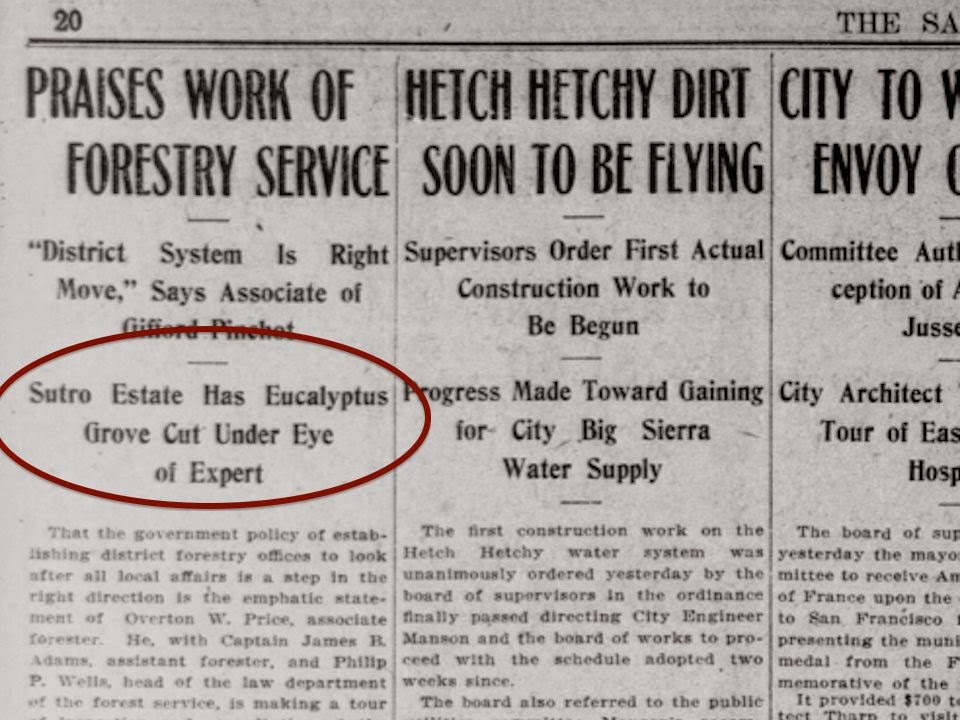
When Sutro died in 1898, he left behind a land-rich, cash-poor estate and kicked off years of legal battles and squabbling among his heirs. In 1909, a deal was announced between the Sutro estate and Consolidated Eucalyptus Co. to log and process trees across 1,538 acres. The company cut only the eucalyptus trees, which were then calculated at numbering 1,000 trees per acre.

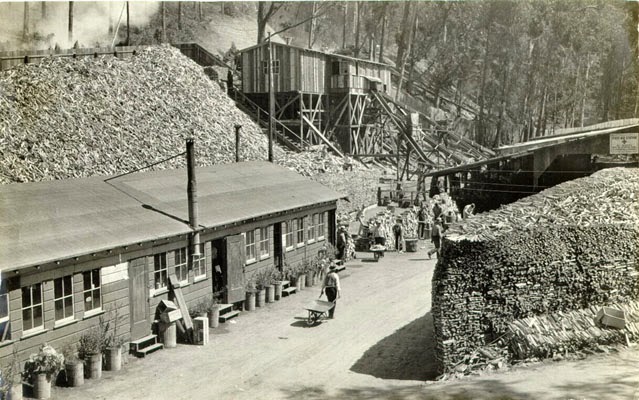
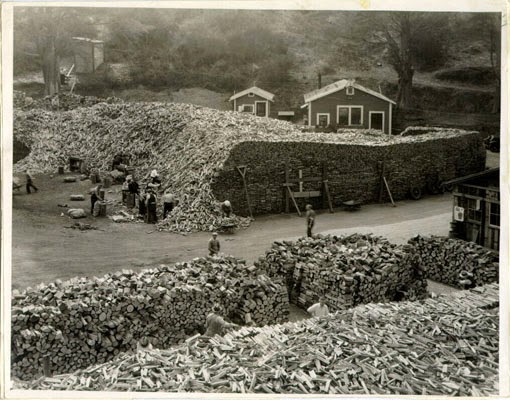
Despite the fact that it was sandwiched between a college campus and a residential neighborhood, Mt. Sutro’s bounty of timber was harvested for years. The trees grew quickly and were chiefly processed to make paper products and oil, which stores so much energy that eucalyptus are known to explode while burning.

Here’s a peek at the Sutro forest wood yard in 1934:

via San Francisco History Center, SFPL

via San Francisco History Center, SFPL

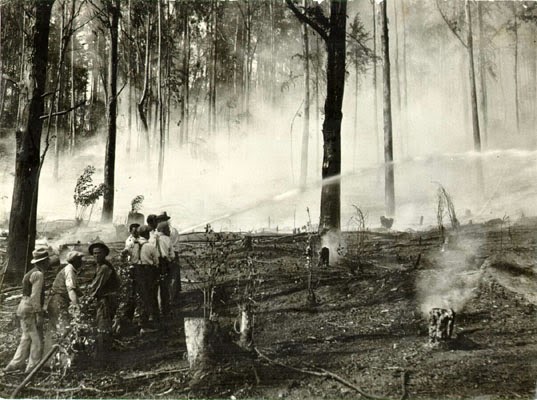
Logging continued intermittently until October 15, 1934, when a 10-acre fire fanned across the hillside (pictured below). After it was controlled, locals lost their taste for a backyard lumber mill, and operations ceased until they were briefly resumed during WWII.

via San Francisco History Center, SFPL

Fast-forward to the current century, when Mt. Sutro’s forest saga continues. In 2009, controversy erupted after UCSF applied for a federal grant intended to reduce fire risk by removing most of the century-old eucalyptus forest, replacing it with less flammable native plants. After massive opposition from neighborhood groups, UCSF withdrew the grant application and launched a long-term environmental impact study.

Today, the Mt. Sutro Open Space Reserve consists of 61 acres that are the property of UCSF and 19 acres owned by the city. Miles of foggy trails lead hikers and cyclists through an idyllic forest populated by Great Horned Owls, hummingbirds, and pungent trees that top out above 100 feet. Explorers are free to visit the former Nike missile installation and keep an eye out for the 45 species of birds who call these woods home, but there’s virtually no evidence of San Francisco’s last lumber camp.

Leave a comment

Filed under History, Inner Sunset, San Francisco

Six Months In With Green Apple Books On The Park

Hoodline, 2/4/15

greenapple4

courtesy Emily Ballaine

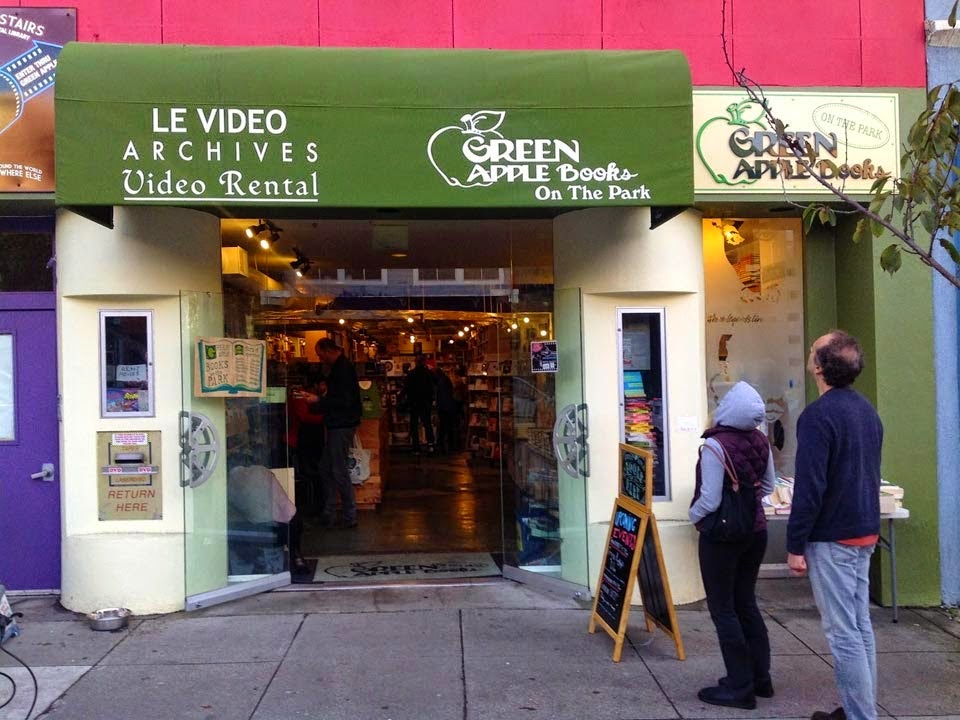
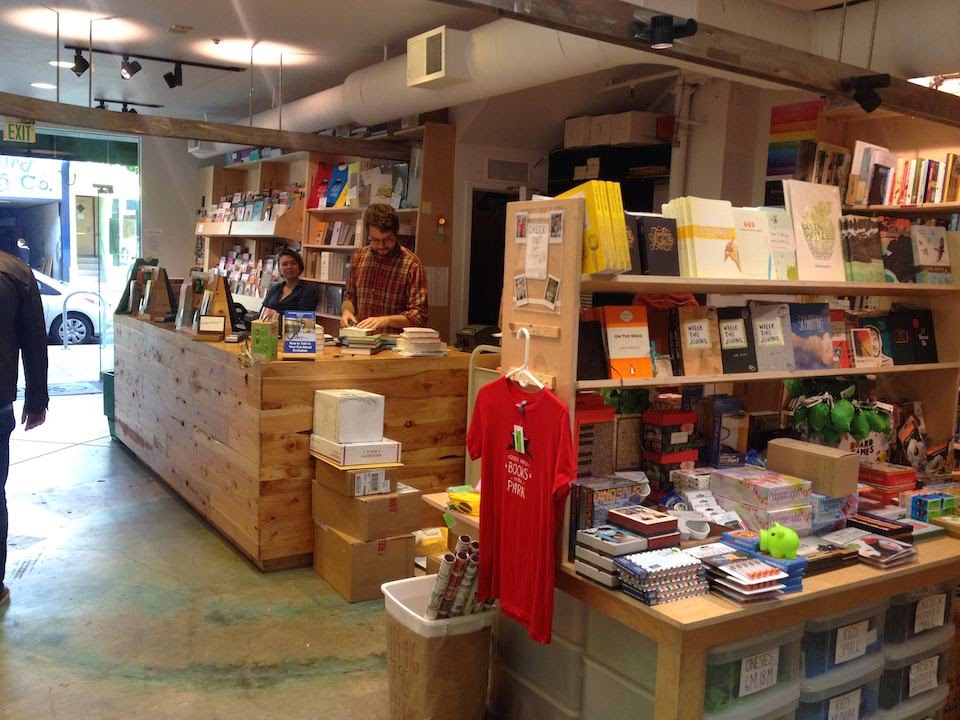
In April 2014, Richmond District-based Green Apple Books announced plans for a second location on 9th Avenue in the space formerly occupied by Le Video. After several years of operating at a loss, the renowned home video archive moved upstairs to make room for Green Apple Books on the Park, which opened in August 2014.

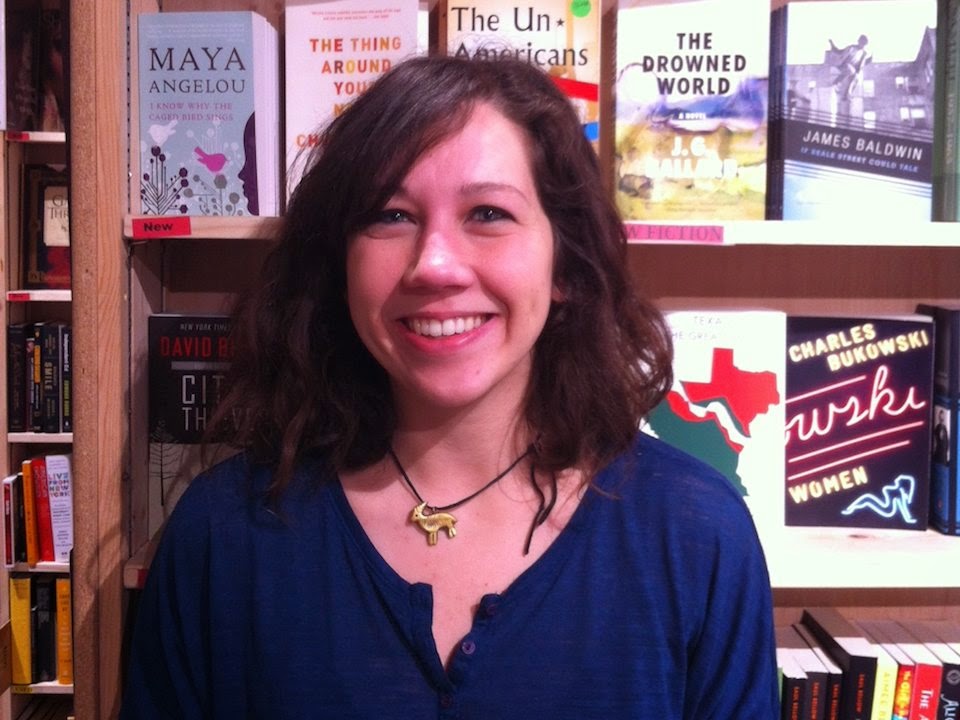
According to Emily Ballaine, the bookstore’s assistant manager, “we’re able to do so much more with the space to keep them in business. I think it’s turned out really well.”

Hoodline/Walter Thompson

After raising funds via Indiegogo to cover the cost of moving upstairs, Le Video rented its mezzanine level to Green Apple Books on the Park. “We had three weeks to turn it into a bookstore” after Le Video moved in July, Ballaine said. “We used that whole month to make it happen.”

Green Apple Books is one of the oldest independent booksellers in San Francisco. First founded in 1967, the original Clement Street location now covers about 10 times its original 750 square feet and is stocked with thousands of new and used books.

Green Apple Books on the Park is less densely packed, with higher ceilings, more natural light and wider aisles than its sister to the north. Unlike the Clement Street location, the roomy spinoff focuses on the sale of new books and magazines. “I think there was a little concern that we’d be stealing profits from the other store, but the neighborhood really welcomed us,” said Ballaine.

courtesy Emily Ballaine

“A lot of people are still finding out that we’re here, even though we opened in August,” she said. “Many people who’d never even heard of the other store are now finding us.”

The new location regularly hosts author events, which helps differentiate the locations. “The way we designed this store was to be able to open things up so we can have bigger authors come into town,” said Ballaine. “It’s worked out really well for us, I feel like that’s more of the niche we have on this side of the park.”

By inviting customers in for recurring events, “I think we’re making people come out,” Ballaine said. “That’s why so many authors got excited when we got this store, It seems like people are willing to come out for them.” Last fall, the store held a midnight release party for Haruki Murakami’s latest book, and upcoming plans include a writer’s panel to support emerging authors.

“What really makes the store special is that everyone who works here is really passionate about books and we love talking about them,” said Ballaine, who’s worked for the local chain since 2012. “We and Le Video have a staff that’s knowledgeable and want to share that with other people.” Each employee specializes in different sections: she manages the shelves for music and essay journalism.

Hoodline/Walter Thompson

“The biggest draw about going to a bookstore is that you’re having an experience and discovering things that you definitely wouldn’t have found anywhere else,” she said. “The way you compete is to have a very curated stock. People come in here to find things that they want to be surprised by, things that you wouldn’t necessarily find just clicking on Amazon.”

“I think that’s why people go to bookstores still: to spend time with people who really know about books and will help them find something they wouldn’t have necessarily found anywhere else.”

Leave a comment

Filed under Inner Sunset, San Francisco