Monthly Archives: January 2016

Circus Center: An Historic School For Clowns, Jugglers And Acrobats

Hoodline, 3/4/15

circus3

In years past, running away to join the circus was a childhood fantasy. Today, at the Inner Sunset’s Circus Center, responsible adults attend evening and weekend classes with names like “Flying Trapeze” and “Intro to Parkour.”

To learn more about what Wikipedia describes as “one of the foremost circus schools in the western United States,” Hoodline spoke to Barry Kendall, the organization’s Executive Director.
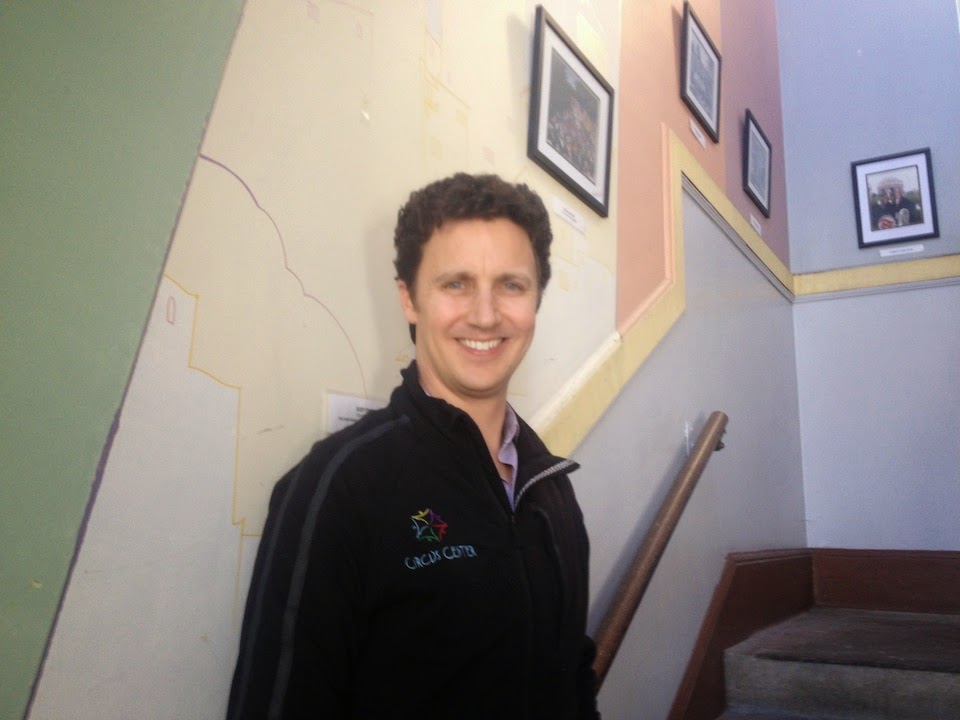
“If you can master the knee hang, you can try a catch in your very first class,” Kendall told us. “Which is great for one-shot people who want instant gratification. We get a lot of people who just want to try something new, like tight wire walking or juggling.”

Kendall said many new students attend so they can cross an item off their bucket list, but returning students are more motivated by personal fitness goals: “We like to say there’s ‘fit,’ and then there’s ‘circus fit.’”

“What we teach is definitely functional movement, but a lot of people also like it for the artistic element. There’s overlap with dance and gymnastics,” he added. “We do have students here who came in with an aspiration to become professionals” – by way of explanation, he pointed to a man swinging from his knees about 25 feet over our heads. “He’s now auditioning for major circus schools around the world, and he’s going to make a career of this.”

Many students seek a career in a traditional circus environment or in an ensemble company like Cirque de Soleil, he added. Others are acquiring skills they can use to entertain at children’s parties or corporate events. “Producers very often don’t just hire you, they’re hiring your act. Hopefully, you get an agent to hire you, and you’re off and running,” he said.
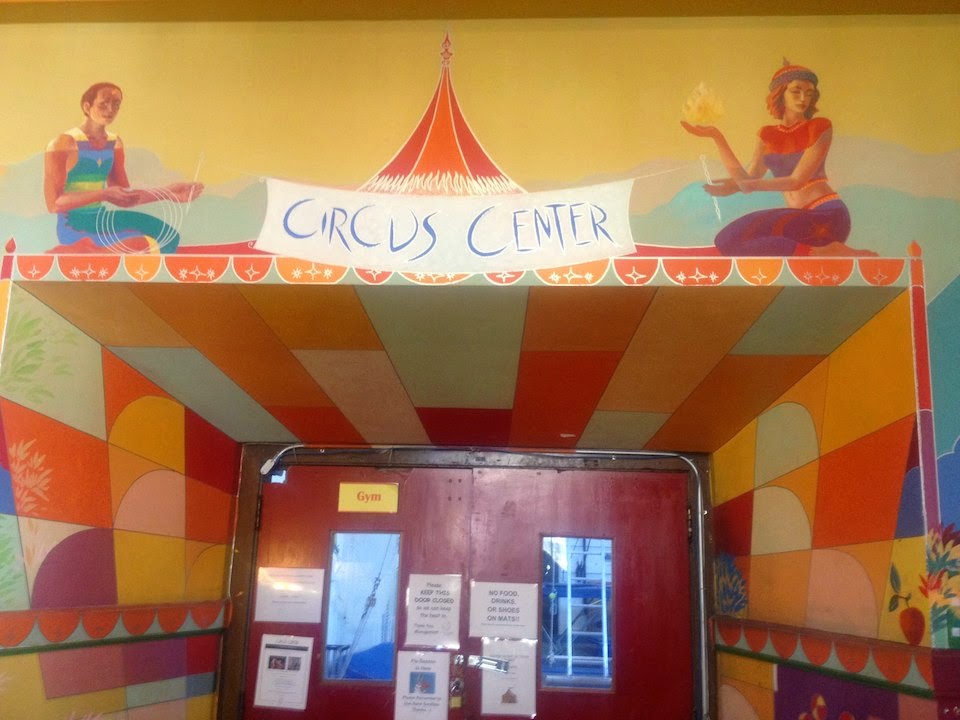
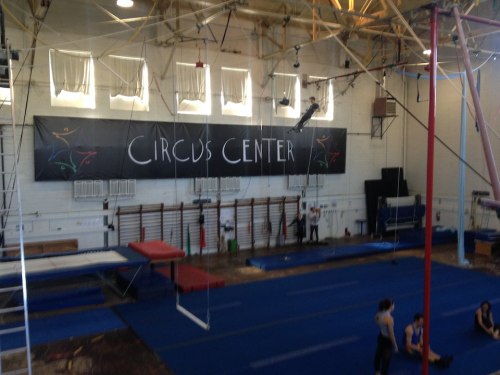
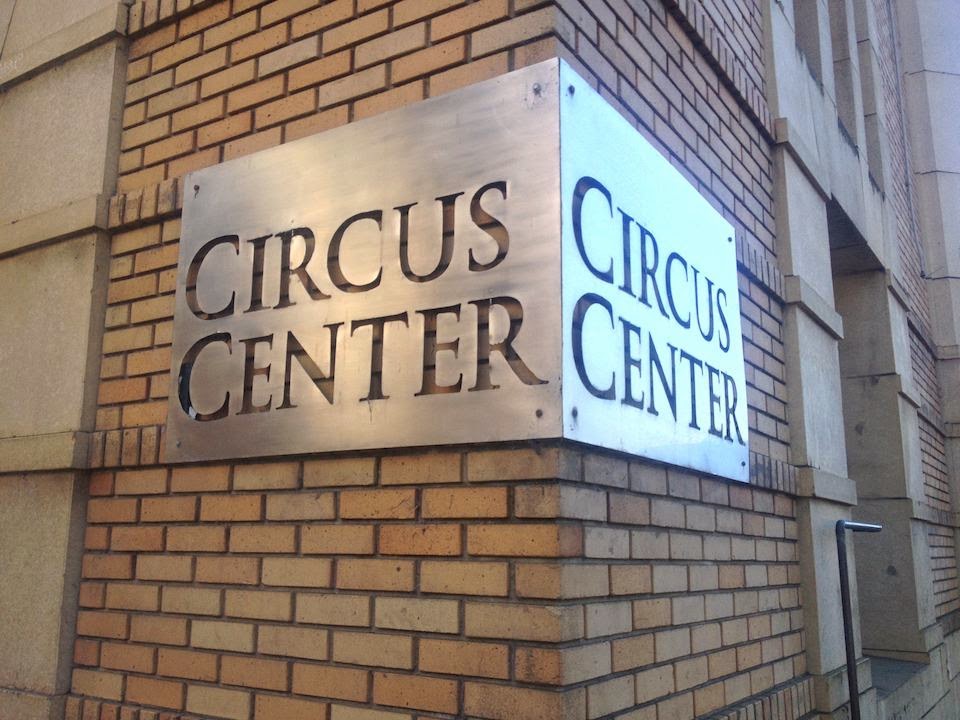
Circus Center’s offices and performance spaces are located in the former gymnasium of Polytechnic High School, which Hoodline recently looked at here. After the school was demolished, its gym and auditorium were left standing so that the city could turn them into community centers, “but the city didn’t have the money for that” as Kendall put it. Circus Center, which bills itself as “the Bay Area’s oldest 501(c)(3) non-profit circus performing arts facility,” doesn’t have a lease, but he said the school will be able to use the space indefinitely. After years of ongoing renovations, the school has about 40,000 square feet.

Circus Center instructs students in the finer points of pulse-pounding specialties like acrobatics, flying trapeze, parkour and Chinese pole, but Kendall emphasized that safety is their first priority.
“We have a professional rigger who’s been doing stagehand and rigging work for many, many years,” Kendall assured us. “We have a very clear and well-documented system for how we maintain and rotate out all of our equipment.” New students receive safety training and start off wearing harnesses attached to safety lines managed by someone firmly rooted on the ground.

“You’re still going to have overcome some fear just to climb 25 feet into the air, however,” he said.

Circus Center’s youth circus will perform during the first two weekends in May in a show called “Circtopia.” The school’s spring session begins on March 30 and runs through June 7. For more details, be sure to explore the many options available on their site.
Leave a comment

Filed under Inner Sunset, San Francisco, Uncategorized

Inner Sunset Hidden Gem: The Carl Street Free Library

Hoodline, 2/28/15

carllibrary

The San Francisco Public Library operates 27 branches and 5 bookmobiles, but that hasn’t stopped free libraries from popping up around America’s 10th-most literate city (as determined by USA TODAY).

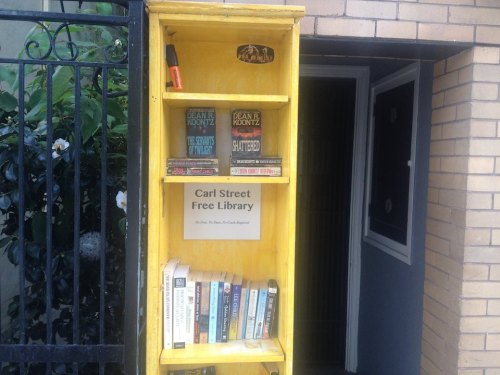
On the 300 block of Carl Street between Willard and Hillway in the Inner Sunset, one generous, mysterious bibliophile has maintained a free library outside their front door for several years. Over the last few years, the collection has grown from two shelves to a six-foot bookcase that’s secured with a bicycle lock. (At the time of this writing, Hoodline wasn’t able to obtain the name of the library’s landlord.)

[Update: the creator, Jay Streets, has provided an extensive personal history of the library in the comments section below. Check it out.]

Ad hoc libraries are peppered throughout book-loving San Francisco, such as the Little Free Library on Sutter between Pierce and Scott, or the collection on Noe near Duboce Park that’s been stolen and set aflame since it opened in 2014. In contrast, the Carl Street bibliotheque has gone largely unmolested over the last few years.

According to the Little Free Library’s location map, there are six outposts around the city, including another depository in the Inner Sunset at 1823 10th Ave., though the Carl Street bookcase is not listed. Members of the Little Free Library system are encouraged to go through local zoning and approvals; in San Francisco, distributing free merchandise from a sidewalk requires a DPW permit.

To date, neighbors seem more YIMBY than NIMBY about the impromptu book depository.

Leave a comment

Filed under Inner Sunset, San Francisco

The Story Behind The Inner Sunset’s First Firehouse

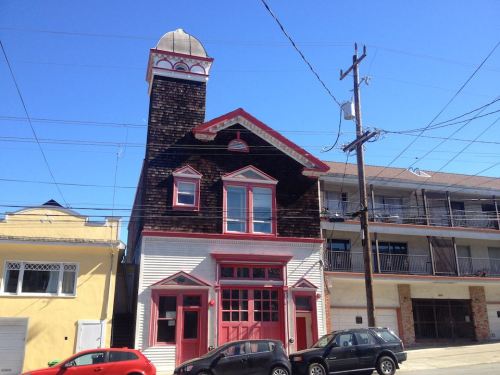
firehouse1

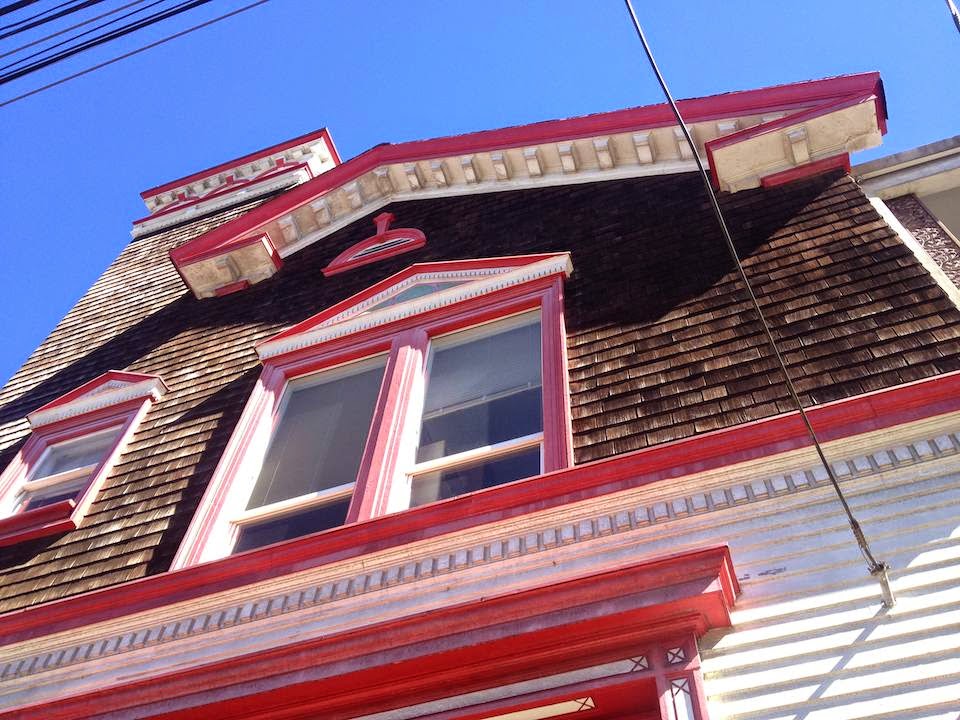
First built in 1898, the Inner Sunset’s oldest firehouse on 10th Avenue between Irving and Judah has been occupied continuously since construction. Over the last 117 years, the building has been home to two fire companies, a school, and currently, a publishing company.

Designed by architect Charles R. Wilson, the firehouse at 1348 10th Ave. was built for Chemical Co. No. 2, an SFFD company that used chemicals for fire control. Wilson designed several other buildings in San Francisco that remain, including the Empress and Windsor hotels in the Tenderloin.

In 1900, Company No. 2 was relocated to 1819 Post St. to make room for Engine Co. No. 22, which tapped the city’s new water mains. (By 1948, all SFFD chemical companies were converted into Tank Wagon Companies.)

The exterior still has all the hallmarks of a classic firehouse (including a tower where hoses hung to dry) but once inside, it’s clear that the space has been adapted for different uses over the last century. The city moved Engine Co. No. 22 out in 1962 and sold the building in 1969 to Oakes Children’s Center, a school for children with “a range of behavioral and neurological disorders.” In 1970, the firehouse was listed as #29 out of 265 designated San Francisco landmarks.

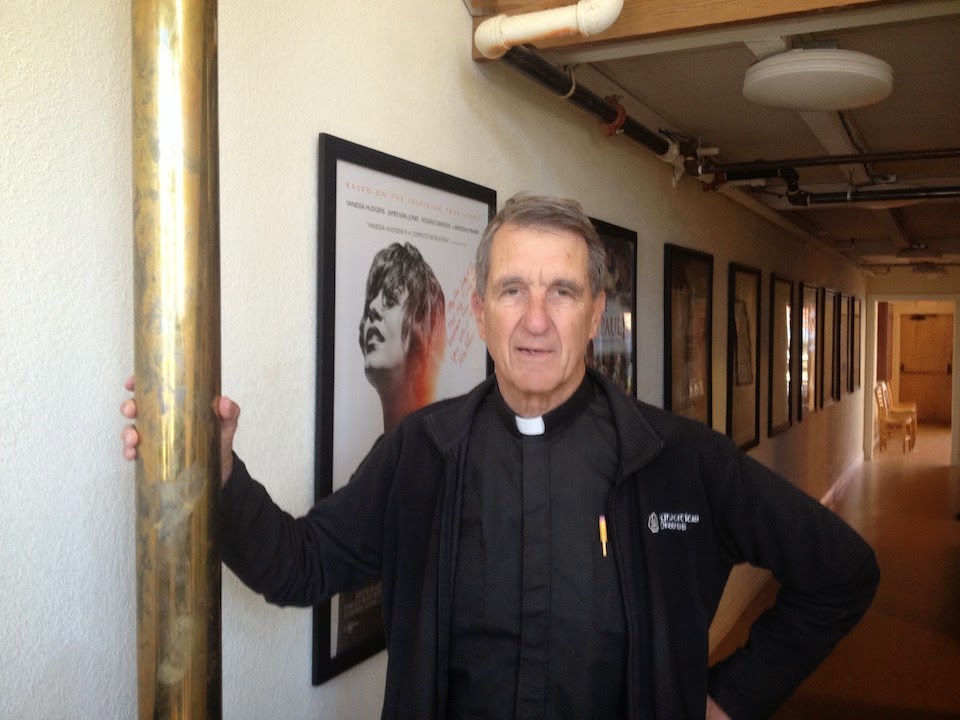
By 2008, the school had outgrown the space and sold the building to Ignatius Press, a Catholic publishing company. For Father Joseph Fessio, an editor, “there’s no place in the entire world that’s as convenient as this location. It’s like having a little town in the middle of a big city.”

Before relocating to the firehouse, Ignatius Press was operated from a house near USF that was owned by Carmelite nuns. Today, about 15 people work out of the converted space. “We didn’t want to get an industrial building, because we’re more a family than a business,” said Fessio.

After it moved in, Ignatius Press significantly remodeled, adding a mezzanine level and refurbishing the basement with an exercise room and a guest room.

“This building was perfect—it was zoned so we could have a school, it’s in a residential neighborhood near the stores, and the N-Judah is right there,” said Fessio. “This area has everything.”

Leave a comment

Filed under History, Inner Sunset, San Francisco