Category Archives: History

The Story Behind The Inner Sunset’s First Firehouse

firehouse1

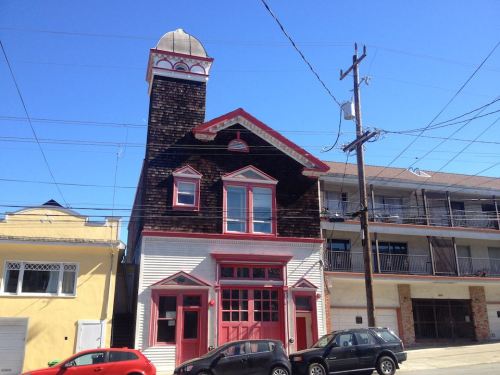
First built in 1898, the Inner Sunset’s oldest firehouse on 10th Avenue between Irving and Judah has been occupied continuously since construction. Over the last 117 years, the building has been home to two fire companies, a school, and currently, a publishing company.

Designed by architect Charles R. Wilson, the firehouse at 1348 10th Ave. was built for Chemical Co. No. 2, an SFFD company that used chemicals for fire control. Wilson designed several other buildings in San Francisco that remain, including the Empress and Windsor hotels in the Tenderloin.

In 1900, Company No. 2 was relocated to 1819 Post St. to make room for Engine Co. No. 22, which tapped the city’s new water mains. (By 1948, all SFFD chemical companies were converted into Tank Wagon Companies.)
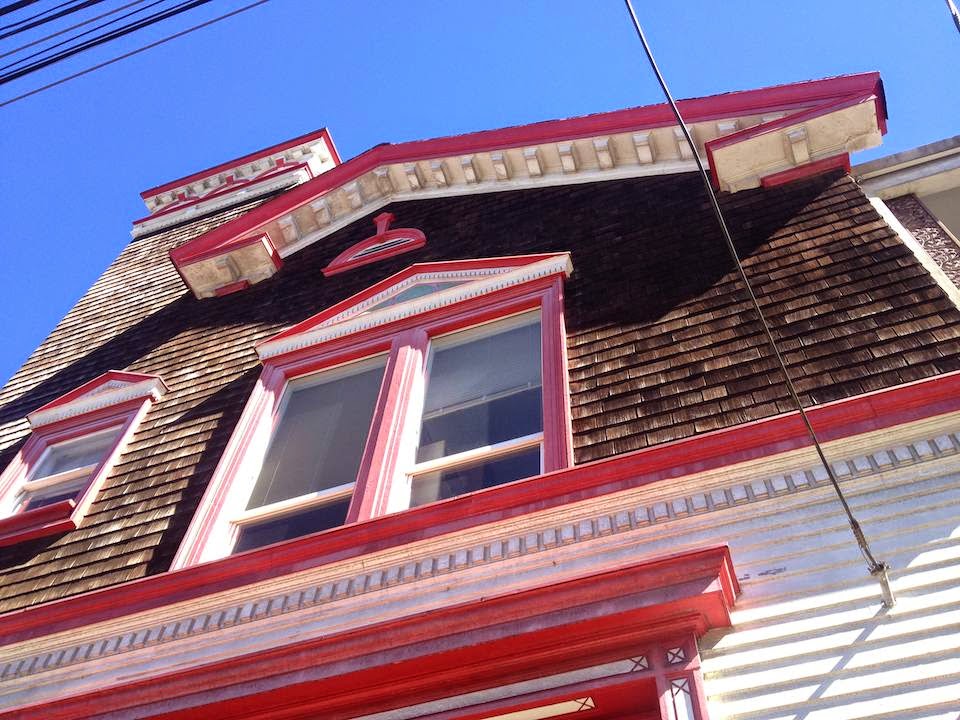
The exterior still has all the hallmarks of a classic firehouse (including a tower where hoses hung to dry) but once inside, it’s clear that the space has been adapted for different uses over the last century. The city moved Engine Co. No. 22 out in 1962 and sold the building in 1969 to Oakes Children’s Center, a school for children with “a range of behavioral and neurological disorders.” In 1970, the firehouse was listed as #29 out of 265 designated San Francisco landmarks.

By 2008, the school had outgrown the space and sold the building to Ignatius Press, a Catholic publishing company. For Father Joseph Fessio, an editor, “there’s no place in the entire world that’s as convenient as this location. It’s like having a little town in the middle of a big city.”
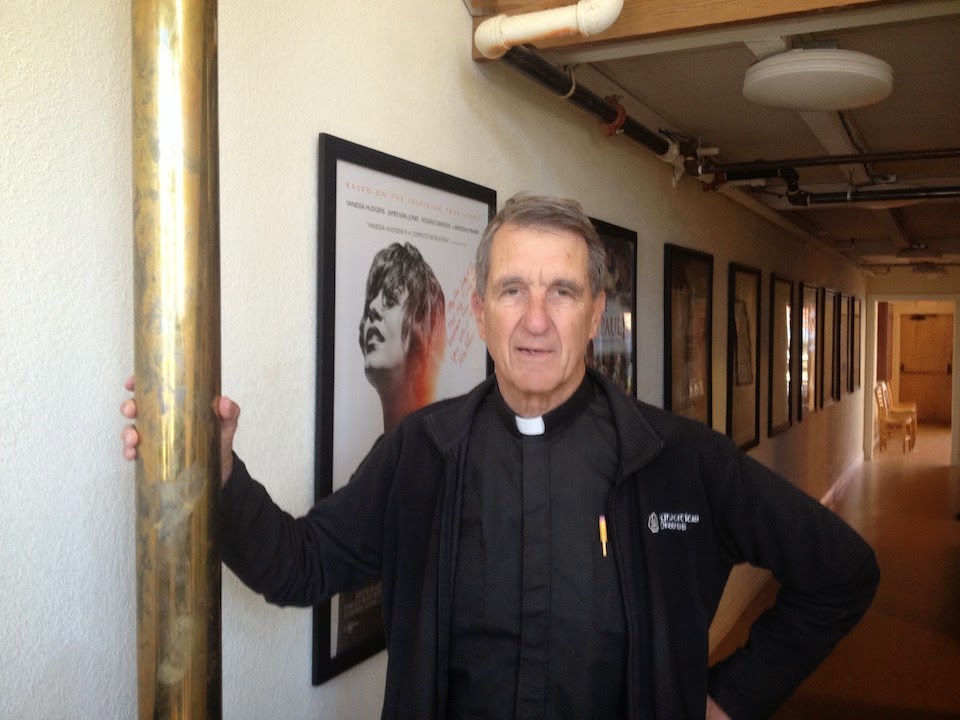
Before relocating to the firehouse, Ignatius Press was operated from a house near USF that was owned by Carmelite nuns. Today, about 15 people work out of the converted space. “We didn’t want to get an industrial building, because we’re more a family than a business,” said Fessio.

After it moved in, Ignatius Press significantly remodeled, adding a mezzanine level and refurbishing the basement with an exercise room and a guest room.

“This building was perfect—it was zoned so we could have a school, it’s in a residential neighborhood near the stores, and the N-Judah is right there,” said Fessio. “This area has everything.”
Leave a comment

Filed under History, Inner Sunset, San Francisco

A Look Back: Logging Eucalyptus Trees On Mt. Sutro

Hoodline, 2/16/15

sutroforest5

   Flickr/Kevin Bovard

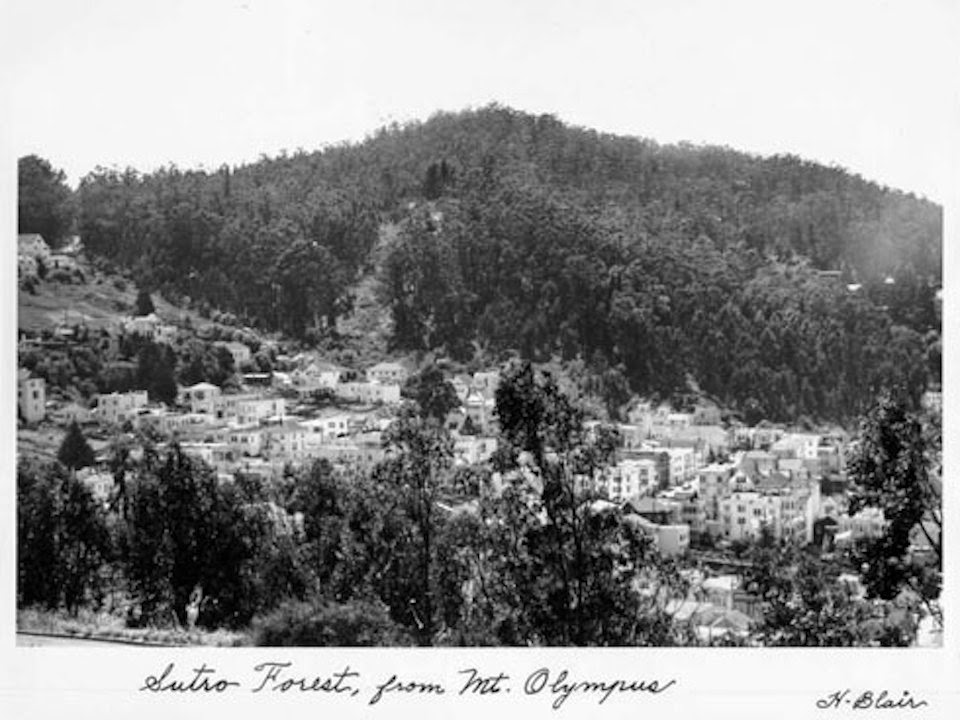
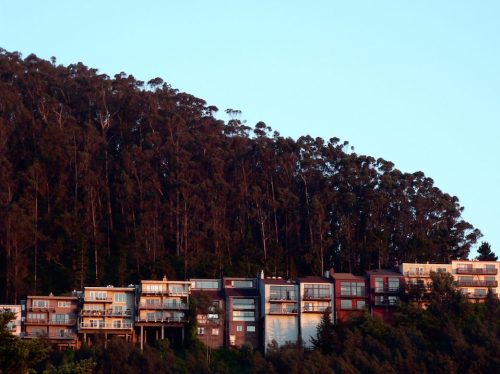
Shrouded in fog and densely studded with eucalyptus trees, Mt. Sutro is the Inner Sunset’s most prominent natural landmark. Despite the neighborhood’s ongoing evolution, it’s clear why the city’s third-highest hill has been used for a university hospital, a Cold War missile battery, and until 1934, a commercial lumber operation.

courtesy San Francisco Public Library

After cashing out his Nevada silver mining holdings in 1879, German engineer Adolph Sutro moved to San Francisco and began acquiring large tracts of real estate. At his peak, Sutro owned as much as 10 percent of the city, including Land’s End, Mt. Davidson and what was then known as Mt. Parnassus, a sand dune covered with native grasses and shrubs.

Sutro used his wealth to create attractions like the Cliff House, Sutro Baths, and critically, infrastructure that connected his new western neighborhoods with the rest of the city. During his tenure as Mayor, he donated 15 acres to Affiliated Colleges of the University of California to create what’s now known as UCSF’s Parnassus campus. He also had thousands of eucalyptus trees planted to the west and south of present-day Mt. Sutro, extending at one point all the way to Monterey Boulevard.

This large-scale forestry operation used a nursery near Laguna Honda as a research and development facility. Sutro’s tree-love led him to kick off the state’s first Arbor Day in 1886, but historians note that forested land within city limits also received substantial tax breaks. Whatever his reasons, however, Sutro had created a dense forest of blue gum eucalyptus, Monterey pine and Monterey cypress atop the hill that would bear his name.

By 1889 the nursery at 1000 Clarendon had 250,000 plants, where different species were evaluated for their ability to thrive in sandy soil. Blue gum eucalyptus was the leading selection, which is why these trees now comprise 80 percent of the population. According to reports of the day, plantings were managed by teams of workers whose efforts were complemented by arboreal-minded residents and schoolchildren.

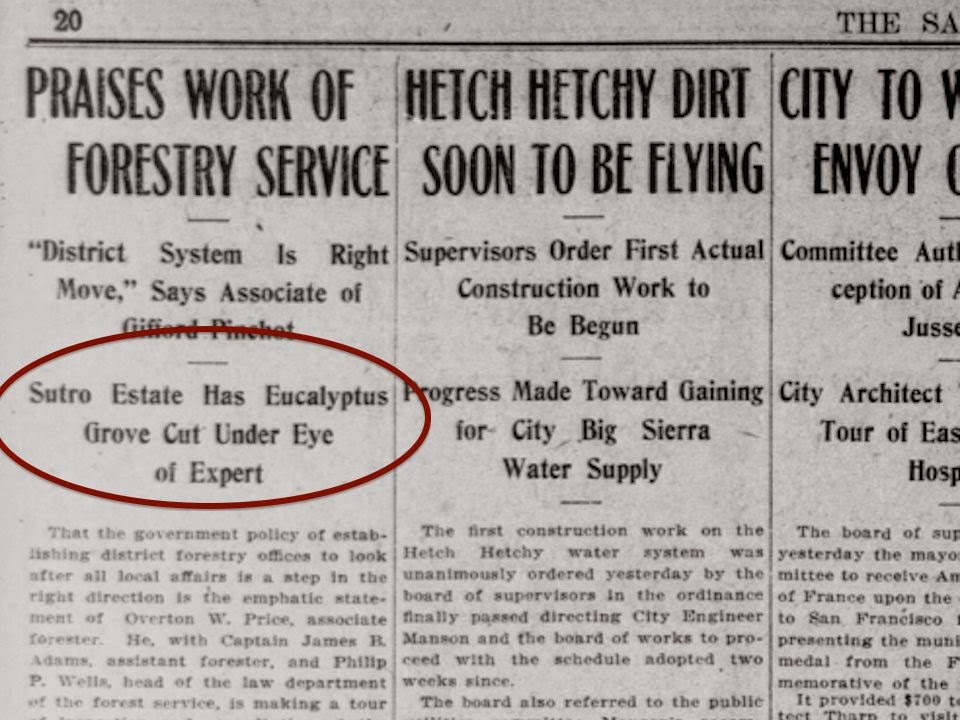
San Francisco Call, 4/30/1909

When Sutro died in 1898, he left behind a land-rich, cash-poor estate and kicked off years of legal battles and squabbling among his heirs. In 1909, a deal was announced between the Sutro estate and Consolidated Eucalyptus Co. to log and process trees across 1,538 acres. The company cut only the eucalyptus trees, which were then calculated at numbering 1,000 trees per acre.

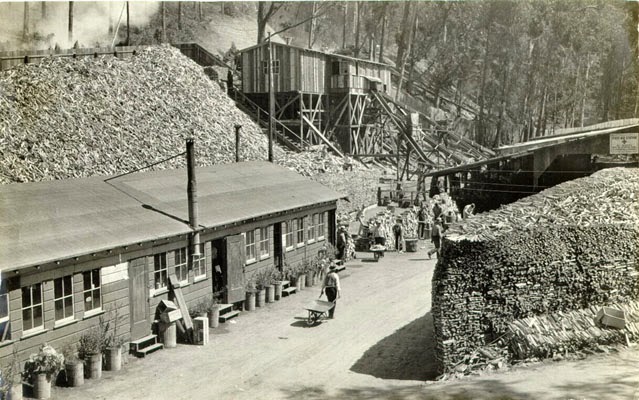
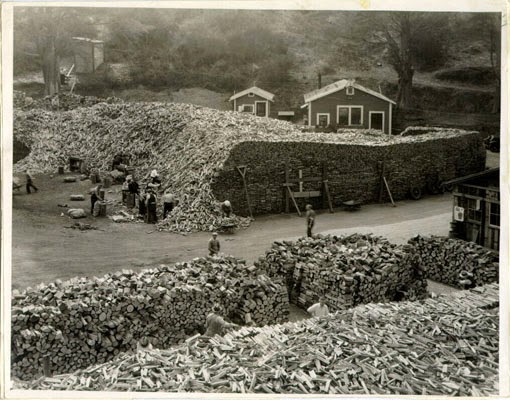
Despite the fact that it was sandwiched between a college campus and a residential neighborhood, Mt. Sutro’s bounty of timber was harvested for years. The trees grew quickly and were chiefly processed to make paper products and oil, which stores so much energy that eucalyptus are known to explode while burning.

Here’s a peek at the Sutro forest wood yard in 1934:

via San Francisco History Center, SFPL

via San Francisco History Center, SFPL

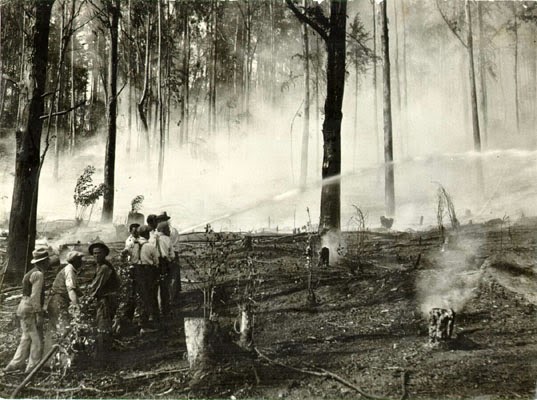
Logging continued intermittently until October 15, 1934, when a 10-acre fire fanned across the hillside (pictured below). After it was controlled, locals lost their taste for a backyard lumber mill, and operations ceased until they were briefly resumed during WWII.

via San Francisco History Center, SFPL

Fast-forward to the current century, when Mt. Sutro’s forest saga continues. In 2009, controversy erupted after UCSF applied for a federal grant intended to reduce fire risk by removing most of the century-old eucalyptus forest, replacing it with less flammable native plants. After massive opposition from neighborhood groups, UCSF withdrew the grant application and launched a long-term environmental impact study.

Today, the Mt. Sutro Open Space Reserve consists of 61 acres that are the property of UCSF and 19 acres owned by the city. Miles of foggy trails lead hikers and cyclists through an idyllic forest populated by Great Horned Owls, hummingbirds, and pungent trees that top out above 100 feet. Explorers are free to visit the former Nike missile installation and keep an eye out for the 45 species of birds who call these woods home, but there’s virtually no evidence of San Francisco’s last lumber camp.

Leave a comment

Filed under History, Inner Sunset, San Francisco

Century-Old Auxiliary Water Supply System Gets New Ashbury Heights Tank

Hoodline, 1/21/15

ashbury2

And now, we bring news of a brand-new 500,000-gallon storage tank which now feeds the city’s century-old backup water system.

But first, some background. After San Francisco’s water supply failed during the 1906 earthquake and fire, city engineers developed the Auxiliary Water Supply System, a standalone high-pressure network fed by reservoirs, cisterns, fireboats and pumping stations.

After over a century, the AWSS is badly in need of repair; as part of that work, the Ashbury Street tank, a 500,000-gallon reservoir, has been completely rebuilt.

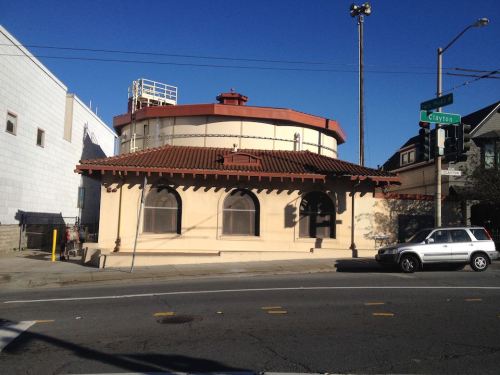
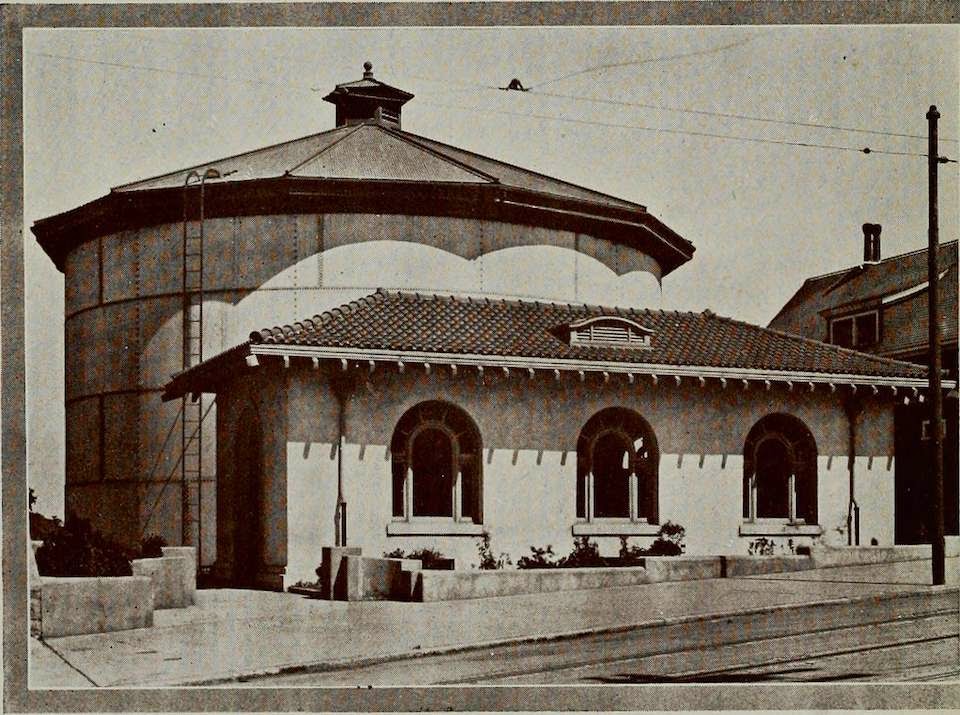
Below is a photo of the Ashbury tank pumphouse taken sometime prior to 1915. You can see that it looks much like the building does 100 years later (above), still sitting pretty at Clayton & 17th Street.

(Internet Archive)

Even in 2015, the AWSS is the only system of its kind in the United States. Three reservoirs located on Nob Hill, Twin Peaks and Ashbury Heights are linked to 135 miles of pipeline capable of carrying fresh water, as well as seawater from the Bay. As a backup, 172 cisterns with a combined storage capacity of 11 million gallons are located throughout the city.

Although the city’s water system hasn’t experienced a significant failure recently, SFFD uses the AWSS several times each year to respond to multi-alarm fires.

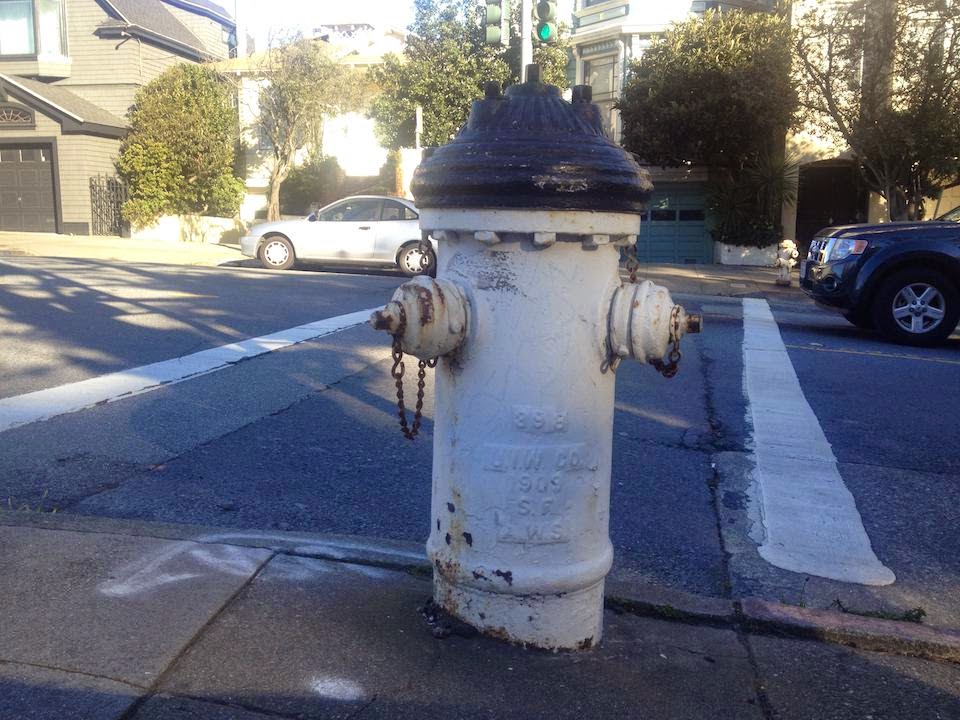
The storage tanks used by the AWSS are maintained at specific levels and are situated at higher elevations to maximize water pressure. At 491 feet above sea level, the Ashbury Tank is capable of producing pressures up to 241 pounds per square inch, compared to the 50 PSI output of regular hydrants. High-pressure hydrants are thicker and larger than typical hydrants.

Each AWSS hydrant is color-coded to the reservoir it draws from. Red-topped hydrants are connected to the Ashbury tank, black are fed from the Twin Peaks reservoir, and blue are connected to the Jones Street tank.

Hoodline/Walter Thompson

Upgrades to the system are funded by a series of Earthquake Safety and Emergency Response bond measures that passed in 2010 and 2014. These measures also cover the cost of a new Public Safety building, upgrades to firehouses and other repairs and improvements that impact first responders. Replacing the Ashbury Heights tank cost approximately $3 million and came out of the ESER 2010 core facilities budget.

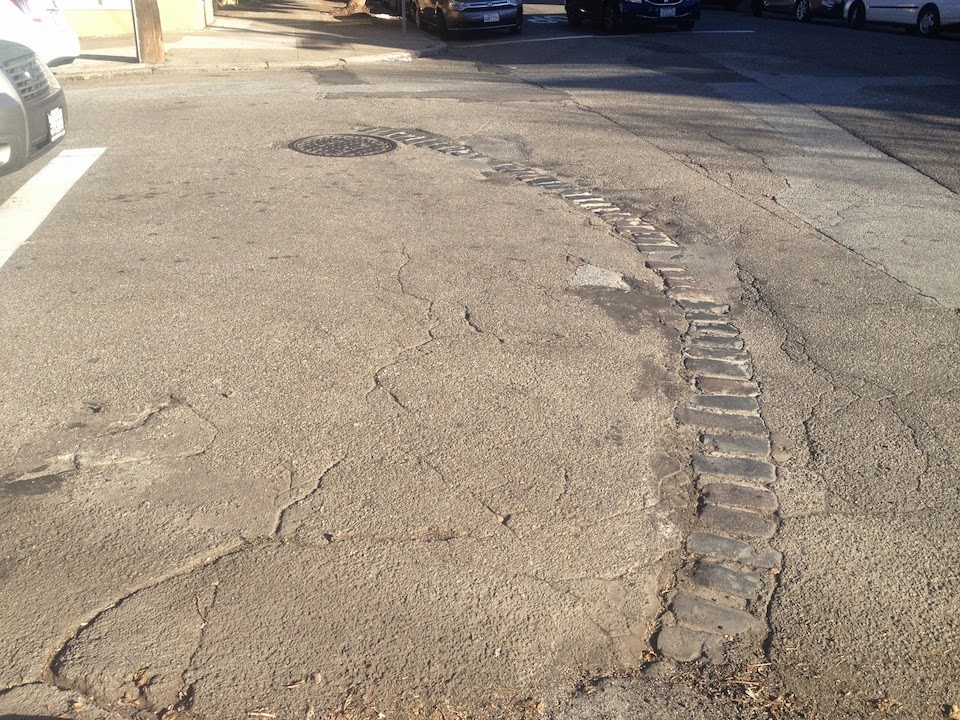
The ESER bond measures will fund the construction of approximately 30 new cisterns, largely in western neighborhoods. Rarely used, these auxiliary tanks are located beneath intersections and are marked by a ring of bricks.

You may have noticed the stones around the city, but probably didn’t realize exactly what they meant. This underground cistern, located at Shrader & Frederick, was built in 1908 and originally had a 75,000-gallon capacity:

Hoodline/Walter Thompson

While photographing the cistern at Shrader & Frederick, a passer-by walking a dog asked what we were shooting. After receiving an explanation, she expressed surprise. “We keep that much water under the street? I had no idea!”

And there you have it: a quick history lesson on where your water comes from, plus good news about infrastructure repairs that should keep the city hydrated for years to come.

Leave a comment

Filed under History, San Francisco