Monthly Archives: January 2016

Century-Old Auxiliary Water Supply System Gets New Ashbury Heights Tank

Hoodline, 1/21/15

ashbury2

And now, we bring news of a brand-new 500,000-gallon storage tank which now feeds the city’s century-old backup water system.

But first, some background. After San Francisco’s water supply failed during the 1906 earthquake and fire, city engineers developed the Auxiliary Water Supply System, a standalone high-pressure network fed by reservoirs, cisterns, fireboats and pumping stations.

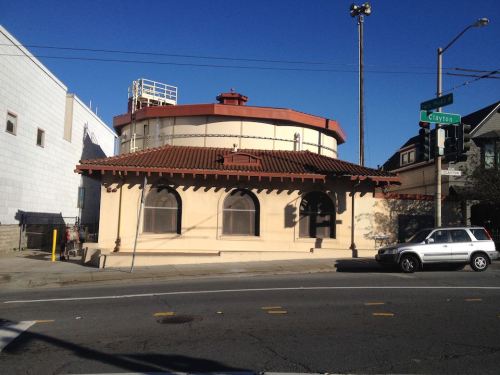
After over a century, the AWSS is badly in need of repair; as part of that work, the Ashbury Street tank, a 500,000-gallon reservoir, has been completely rebuilt.

Below is a photo of the Ashbury tank pumphouse taken sometime prior to 1915. You can see that it looks much like the building does 100 years later (above), still sitting pretty at Clayton & 17th Street.
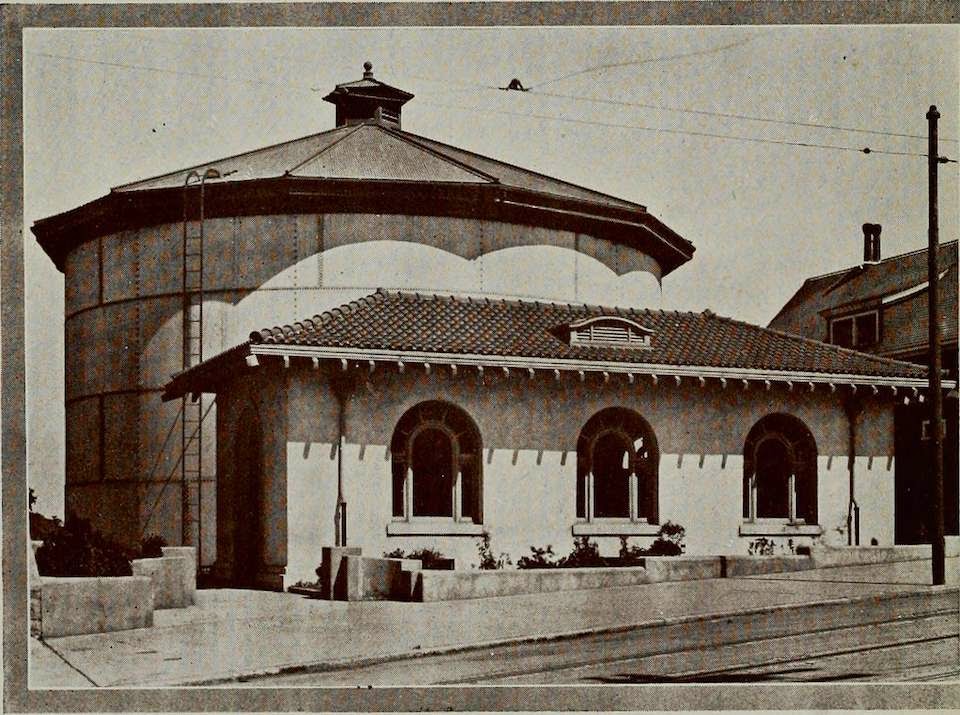
(Internet Archive)

Even in 2015, the AWSS is the only system of its kind in the United States. Three reservoirs located on Nob Hill, Twin Peaks and Ashbury Heights are linked to 135 miles of pipeline capable of carrying fresh water, as well as seawater from the Bay. As a backup, 172 cisterns with a combined storage capacity of 11 million gallons are located throughout the city.

Although the city’s water system hasn’t experienced a significant failure recently, SFFD uses the AWSS several times each year to respond to multi-alarm fires.

The storage tanks used by the AWSS are maintained at specific levels and are situated at higher elevations to maximize water pressure. At 491 feet above sea level, the Ashbury Tank is capable of producing pressures up to 241 pounds per square inch, compared to the 50 PSI output of regular hydrants. High-pressure hydrants are thicker and larger than typical hydrants.

Each AWSS hydrant is color-coded to the reservoir it draws from. Red-topped hydrants are connected to the Ashbury tank, black are fed from the Twin Peaks reservoir, and blue are connected to the Jones Street tank.
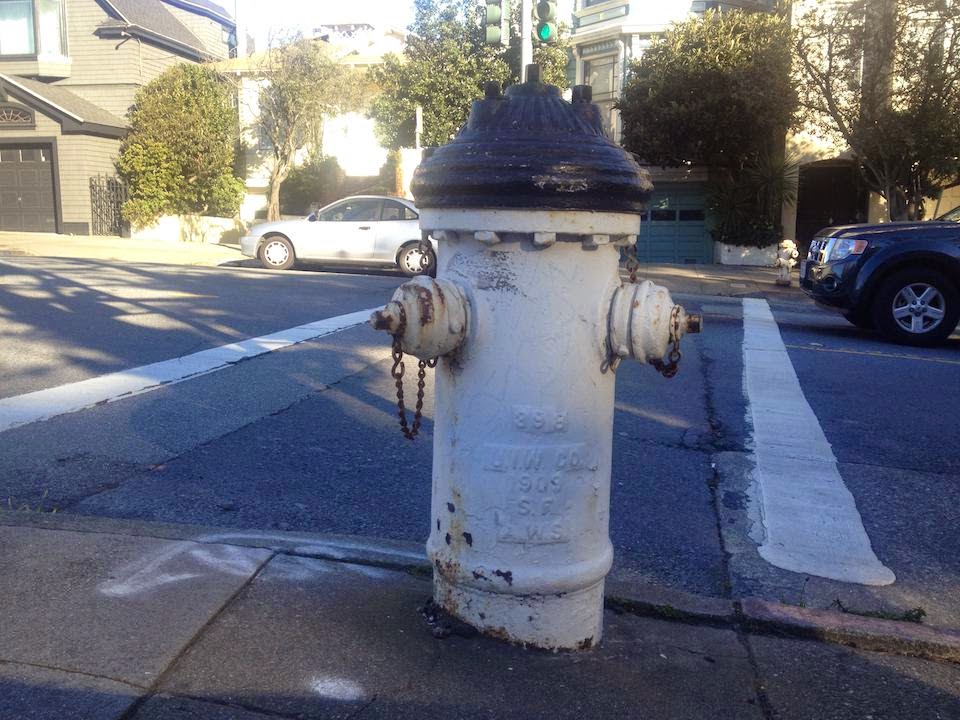
Hoodline/Walter Thompson

Upgrades to the system are funded by a series of Earthquake Safety and Emergency Response bond measures that passed in 2010 and 2014. These measures also cover the cost of a new Public Safety building, upgrades to firehouses and other repairs and improvements that impact first responders. Replacing the Ashbury Heights tank cost approximately $3 million and came out of the ESER 2010 core facilities budget.

The ESER bond measures will fund the construction of approximately 30 new cisterns, largely in western neighborhoods. Rarely used, these auxiliary tanks are located beneath intersections and are marked by a ring of bricks.

You may have noticed the stones around the city, but probably didn’t realize exactly what they meant. This underground cistern, located at Shrader & Frederick, was built in 1908 and originally had a 75,000-gallon capacity:
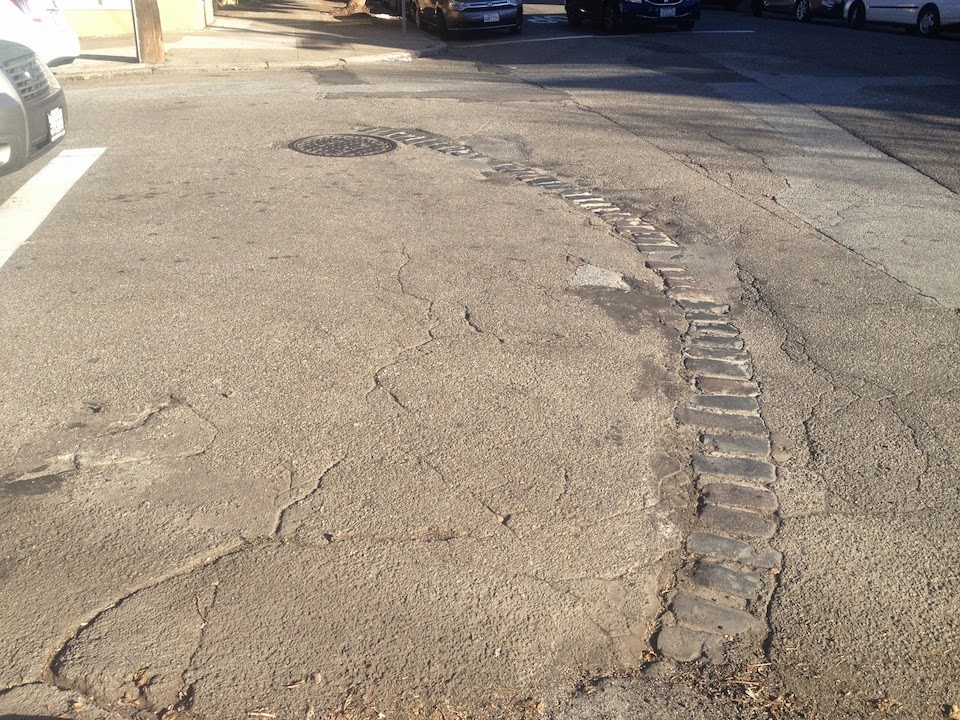
Hoodline/Walter Thompson

While photographing the cistern at Shrader & Frederick, a passer-by walking a dog asked what we were shooting. After receiving an explanation, she expressed surprise. “We keep that much water under the street? I had no idea!”

And there you have it: a quick history lesson on where your water comes from, plus good news about infrastructure repairs that should keep the city hydrated for years to come.
Leave a comment

Filed under History, San Francisco

The Louies And The News: Saying Goodbye After 28 Years

Hoodline, 1/12/15

louiepereetfils

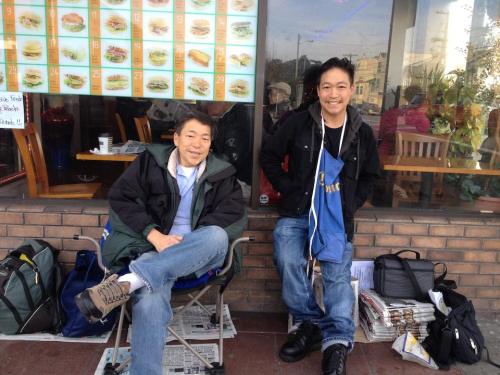
After 28 years of selling newspapers directly to Sunset customers on weekend mornings, Daniel and Eric Louie are retiring from the news hawker game this weekend.
For Eric, a weekend job he stumbled into while selling candy in fifth grade helped fuel a desire to become a journalist. Daniel, his father, has shaken hands with local politicos, met thousands of his neighbors and become what he calls “the mayor of Irving Street.”
In 1987, then 10-year-old Eric approached an agreeable news vendor outside Uncle Benny’s Doughnut Shop to ask if he could share the spot to sell school candy. “When the [newspaper delivery] driver came by, he asked, ‘you can sell candy, can you sell papers?’ and I said, ‘yeah, I can do it,’” Eric told us.
Eric showed up the next Saturday and started working. Once a crime reporter in Stockton, Eric now owns a home in San Leandro where he works as a video news cameraman and caterer, but he’s been coming back on weekends over the last year to spend more time with his father. Daniel took over the business when Eric graduated from high school.
After that, Daniel would sell one pile of papers from Irving & 22nd on Saturdays and started a second corner outside a KFC at Irving & 20th on Sundays. At their peak, the father-and-son team sold about 100 copies of a combined early edition of the Chronicle/Examiner each day, enough to create an improvised chair.
Now, “my dad brings a seat, but I’m used to not having one,” said Eric. An average Saturday now consists of 18-20 sales, while Eric stands or leans against the facade of the donut shop.
In 1987, Eric said there were multiple news vendors between 9th and 19th along the commercial strips on Irving and Judah. “It used to be that on Sundays, this was a very quiet, seemingly remote location and there was really no activity,” said Daniel. “Now, there are a lot of people conducting commerce on Sundays.” With the arrival of Walgreens, Starbucks and other corporate retailers, there’s “a loss of local, historical or traditional neighborhood flavors,” he said.
“On Sundays, there’d be no cars parked here and all the businesses would be closed,” said Eric, who noted that a large influx of Asian-American residents in the 1980s changed the area’s character. He described a childhood incident in which a neighbor threatened to call police because someone lit fireworks to celebrate Chinese New Year. “Now, the cops will escort the lion dancers as they blow up firecrackers,” said Eric.
Many factors have combined to erode street newspaper sales, such as a shift to digital content and a gradual decline in the number of elderly customers. “A lot of the older folks want something in hand to read,” said Daniel. “They haven’t become accustomed to reading online because they don’t have access or they’re not attuned to using a computer.” After the Chronicle started selling to local convenience stores, grocery stores and supermarkets, news hawkers took a big hit, Daniel said. “People would do one-stop shopping, plus they felt newspapers were being sold at a discount.”
Both Louies said they enjoy the strong social aspect of selling papers, but “it’s a good decision at this time, just to move on to different things,” said Daniel as Eric nodded in agreement. “It’s good money when you’re 10 years old,” said Eric, “and I have to say, for a little bit, it was more profitable to sell newspapers than write newspapers.”
Daniel and Eric Louie will sell their final editions of the Sunday Chronicle on January 18th, and have invited customers and well-wishers to say their goodbyes on Saturday morning. If you’d like to be one of the Louies’ final customers, you’ll find them outside Benny’s Doughnuts at 2049 Irving St, starting at 8am.

Leave a comment

Filed under Inner Sunset, San Francisco

What’s Moving Into The Former Son Loy Laundry Space On Stanyan?

Hoodline, 12/18/14

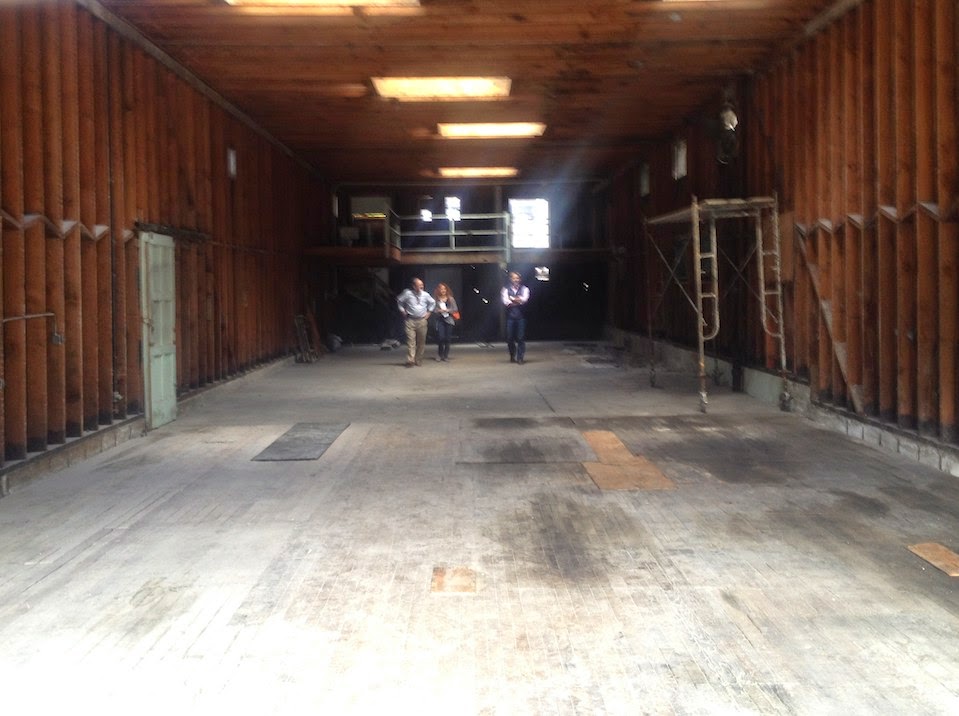
Straddling the border between Upper Haight and Cole Valley, Son Loy Laundry operated on Stanyan Street for more than 50 years. Since it closed several months ago, neighbors and passers-by have speculated about who’ll move into the 2,500 square feet commercial listing described as “wide open warehouse space.”

Yesterday, Hoodline learned that 784 Stanyan is coming off the market. According to Chris Homs, an agent with Lockehouse Retail Group, a new tenant is in the final stages of signing a lease. Homs wouldn’t say who’s moving in, but he said it won’t be a restaurant or a bar. “It’s a good local use,” said Homs, adding that his client already has a connection to the neighborhood.
After the laundry closed, contractors stripped the building down to the studs. Several skylights brighten up the now-cavernous interior; with 15-foot ceilings and no support columns, the space could accommodate nearly any retailer or service provider.
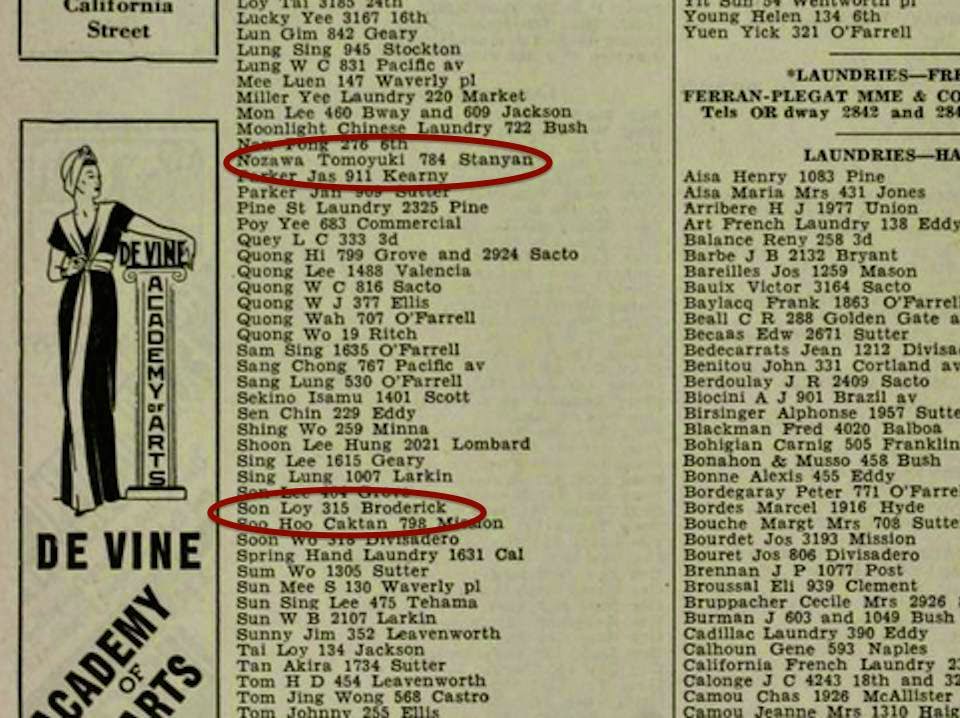
Built in 1940, a  Sanborn map describes the building as a Japanese laundry, which jibes with a 1941 directory listing for Tomoyuki Nozawa at this address. Following the attack on Pearl Harbor in 1942, the US government deported or incarcerated many Japanese-Americans. In a sobering reminder of that dark chapter of American history, records from the Topaz War Relocation Center in Utah indicate that a Nozawa family from Upper Haight/Cole Valley was held there.
A 1942 directory lists a VP Beck as the operator of  a hand laundry at 784 Stanyan St. The following year, Starlight Laundry moved into the space, and by 1954, the operation was doing business as Forest Hill & Stanyan French Laundry.
In 1961, Son Loy Laundry moved from 315 Broderick St. to the Stanyan building. According to a 1915 summary of a Board of Supervisors meeting, Son Loy Laundry had received approval  to install a 6-horsepower boiler on Broderick way back in 1914, making it one of San Francisco’s oldest laundries by the time it closed.
A century later, neighbors are wondering about the new tenant. Julianne Walsh owns Green Pawz, an environmentally-friendly pet shop at 772 Stanyan. “I would like to see ideally a local restaurant,” she said. “Another place to go to and dine after work. This neighborhood could use some more options.”
Katy Hooks manages the front desk at Yoga Tree, next door to the former laundry. She’d like to see a coffee shop. “Yogis can always use some caffeine intake before and after class.”
Zoning requirements narrow down the mystery tenant’s options, as 784 Stanyan is inside a buffer zone that restricts new restaurants and check-cashing establishments. We’ll let you know when we learn more about the next occupant of the space.

Leave a comment

Filed under California, History, San Francisco, Uncategorized